Boise Rat Ordinance: Trash, Compost and Rentals
What the city actually adopted
The Treasure Valley has seen a noticeable increase in rat activity in recent years, according to the City of Boise’s rodent-prevention page. In October 2026 the city updated its nuisance ordinance to address the conditions that attract and support that activity. Ordinance No. ORD-43-26, adopted and approved on October 20, 2026, added Boise City Code § 4-1-2, “Rat and Wild Turkey Nuisances.” The city says it is focused on helping residents prepare, and that enforcement begins December 1, 2026.
The ordinance applies to premises inside the City of Boise. It defines a “rat,” for this section, as a wild Norway rat (Rattus norvegicus) or a roof rat (Rattus rattus). It does not apply to domesticated rats or to native and other wild rodents. This page summarizes the adopted text and the city’s own explainer. It is not a substitute for the ordinance, and it is not legal advice.
Trash, compost and outdoor food
Section 4-1-2 requires every person to keep premises in reasonably sanitary condition so they do not provide substantial food or harborage for rats and wild turkeys. In plain terms, the adopted rules and the city’s page ask you to:
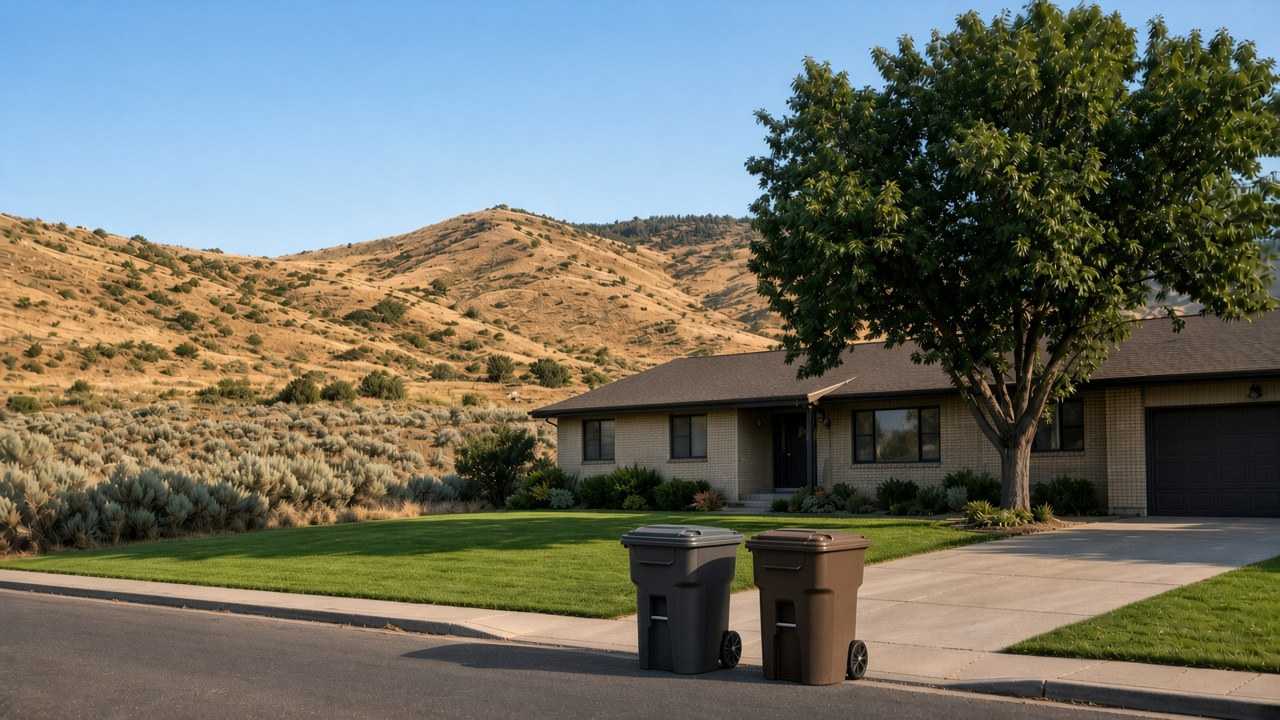
- Secure garbage and food waste in rodent-proof containers, and fix overflowing, damaged or poorly maintained carts.
- Keep trash, recycling and compost cart lids closed. City-provided carts from the city’s franchisee (the city names Republic Services on its explainer) are treated as rodent-proof when they are in good working condition and the lid is kept shut.
- Bag and tie household trash. The city says not to bag recycling or compost.
- Keep raw compost that contains food or another attractant in a fully sealed, rodent-proof container. Raw compost made only of vegetation, such as leaves and sticks, may be managed without a fully sealed container, but it should still be maintained so it does not attract rats.
- Remove fallen fruit, nuts or other concentrated food, and manage outdoor attractants that are already feeding rats or turkeys.
- Place and maintain wild bird and squirrel feeders at least five feet above the ground. The ordinance does not ban bird feeding.
- Remove accumulated refuse, debris and unsanitary materials that provide harborage, and maintain vegetation or stored materials where they are creating nesting areas.
The ordinance also says it does not prohibit otherwise lawful backyard poultry, composting, gardening, bird feeding, or keeping and feeding pets or livestock, so long as those activities are managed so food and waste do not attract rats. For identification and control after you have a problem, see rat control in Boise.
What Boise’s rat ordinance asks households to manage
- Close trash, recycling and compost carts; city-issued carts count as rodent-proof when the lid stays shut and the cart is in good condition
- Keep wild bird and squirrel feeders at least five feet above the ground
- Remove fallen fruit, nuts and other concentrated food sources
- Remove debris and stored materials that provide harborage
- Owners generally handle structural issues and significant harborage; occupants handle sanitation, food and waste under their control
The ordinance does not ban composting, bird feeding or lawful backyard poultry. Raw compost that contains food must be in a sealed rodent-proof container; vegetation-only raw compost is treated differently. Enforcement of this section begins December 1, 2026, and the section is exempt from the chapter’s misdemeanor penalty.
Owners, occupants and how compliance works
Boise City Code § 4-1-2 splits responsibility. Except as otherwise provided by law or agreement, the property owner is responsible for correcting structural deficiencies, significant harborage, or other conditions under the owner’s control. Owners of multifamily, commercial or common-interest properties are responsible for the common areas and structural conditions under their control. An occupant is responsible for sanitation, food storage, waste management and other conditions created by or under the occupant’s control, whether or not that person is the owner. The city’s FAQ adds that a lease or other law may further define those duties.
The same ordinance amends the chapter’s penalty section so that § 4-1-2 is exempt from the misdemeanor penalty that applies to some other nuisances. The city says that if a nuisance is not corrected, it may use its existing nuisance-abatement process, which can include correcting the condition and billing the property owner for the cost. The city does not provide extermination on private property.
To log a sighting, use the rat reporting guide. Homes along ditches can also read rats along canals.
The ordinance is about attractants, not city extermination. For control steps see rat control in Boise. To log a sighting, use the rat reporting guide. Homes along ditches can also read rats along canals.
How to check a Boise property against the ordinance
- 1Inspect
Walk the trash, compost and recycling carts, the feeder height, fallen fruit, pet food, and any debris or stored materials against the foundation or fence.
- 2Identify
Separate owner-side issues (structural gaps, significant harborage, common areas) from occupant-side issues (unsecured waste, outdoor food, overflowing carts). A lease may add detail.
- 3Treat
Close or replace damaged carts, store raw food-containing compost in a sealed container, raise or manage feeders, and pick up attractants. The city does not trap rats for you.
- 4Prevent
Keep lids shut, set carts out on the regular collection schedule, and fix the conditions that would otherwise bring a later abatement notice.
Sources
Frequently asked questions
When does Boise’s rat ordinance take effect?+
The City of Boise says the nuisance ordinance was updated in October 2026 and that enforcement of this section begins December 1, 2026. The city has been in an educational period until then. Ordinance No. ORD-43-26 was adopted and approved on October 20, 2026, and added Boise City Code section 4-1-2, “Rat and Wild Turkey Nuisances.”
Does the ordinance ban composting or bird feeders?+
No. The ordinance does not prohibit lawful composting, bird feeding, gardening or backyard poultry. Raw compost that contains food or another attractant must be kept in a fully sealed, rodent-proof container. Vegetation-only raw compost is treated differently. Wild bird and squirrel feeders must be at least five feet above the ground, and spilled seed should be cleaned up.
Who is responsible in a rental: the landlord or the tenant?+
Boise City Code 4-1-2 says that, except as otherwise provided by law or agreement, the property owner is responsible for structural deficiencies, significant harborage and other conditions under the owner’s control. Occupants are responsible for sanitation, food storage, waste management and other conditions they create or control, whether or not they own the property. A lease may further define those duties. This page is not legal advice.
Will I get a criminal penalty if I violate the rat section?+
The city says this section is exempt from the chapter’s misdemeanor penalty. If a nuisance is not corrected, the city may use its existing nuisance-abatement process, which can include correcting the condition and billing the property owner for the cost. Read the city’s rodent-prevention page for the current compliance process.
Does the city come trap rats on private property?+
No. The City of Boise does not provide pest-control or extermination services. The ordinance is about reducing food, water and harborage. For an active infestation, the city suggests considering a licensed pest-control professional. You can still report sightings as described in our reporting guide.
Licensing in Idaho: how to verify a provider
In Idaho, professional pesticide applicators are licensed by the Idaho State Department of Agriculture (ISDA). To get licensed, they pass an exam for each category of work they do and show proof of financial responsibility. Since ISDA's 2024 rule update, home and building pest work for insects, spiders and wood-destroying pests such as termites falls under the Industrial, Institutional, and Structural Pest Control – Non-Commodity (IP) category. Rodent work may also involve General Vertebrate Control (GV). (ISDA license categories)
Before you hire anyone, ask for the applicator's name and license number. Check that the license is current, and that it covers the right category, with ISDA's Certified Applicator License Search, or call ISDA pesticide licensing at (208) 332-8600. Also ask what products they plan to use, and ask for the label or safety data sheet if you have kids, pets, or a well.