Boxelder Bug Control in Boise, ID
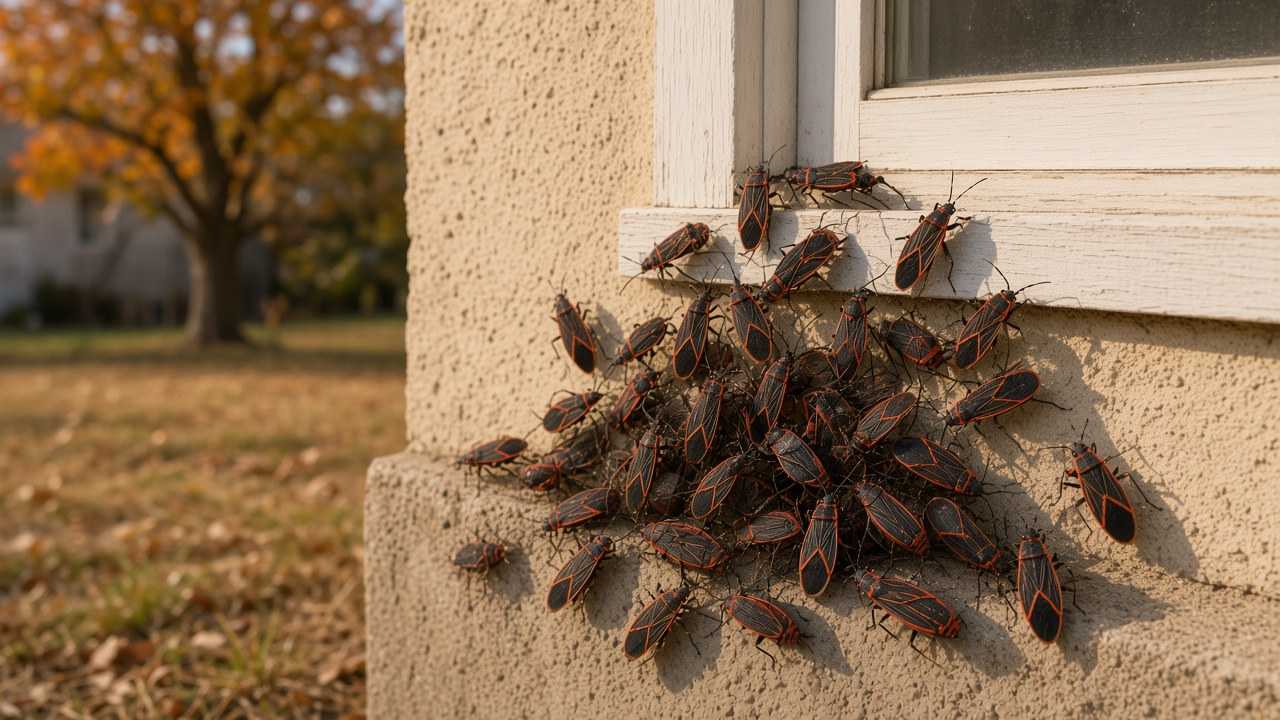
Pest ID: Western boxelder bug (Boisea rubrolineata)
Danger level: LowHow to recognize it
- Adults about ½ inch long, elongated, with a mostly black body
- Red margins and red veins on the wings (the western species)
- Nymphs are smaller and redder, with dark markings as they grow
- Often appear in clusters, not as a single insect
Where it shows up
- Sunny south- and west-facing exterior walls in fall
- Window trim, door frames, soffits and foundation cracks
- Unheated attics, wall voids, garages and other overwintering gaps
- On or under boxelder and some maple trees in spring and summer
Common look-alikes
- Eastern boxelder bug (Boisea trivittata)
- Similar shape, but the veins on the wings are black rather than red. The western species is the one found in this region.
- Other red-and-black seed bugs
- Some look similar at a glance. Boxelder bugs are elongated, gather in clusters on sunny walls in fall, and are tied to maple-family trees.
- Wood-damaging pests
- Mud tubes, hollow wood or sawdust-like frass point to termites or carpenter ants, not boxelder bugs.
Why the danger rating: A nuisance pest. Boxelder bugs do not bite or sting in any medically important way, do not eat wood, and do not reproduce indoors. Feces can stain light-colored surfaces.
Identification
The boxelder bug you will see on Treasure Valley homes is the western species, Boisea rubrolineata. University of Idaho Extension distinguishes it from the eastern boxelder bug, Boisea trivittata, by the wing veins: red on the western insect, black on the eastern one. Adults are roughly half an inch long. They do not eat wood, and their presence alone does not mean you have termites or carpenter ants. If you also see mud tubes or frass, those are separate clues.
Why they gather on south and west walls
In fall, adults leave host trees and look for a place to spend the winter. They collect on warm, sunlit surfaces — most often the south and west walls of a house — then work their way into cracks, window casings, door frames, soffits and foundation gaps. Once inside unheated spaces, they overwinter as adults. They do not feed or reproduce indoors. On a warm winter day a few may wander into living rooms, which is startling but not a new generation.
The same insects try to go back outside in spring to reach host trees. That is why a house can see a pulse of activity twice: a large fall arrival, and a smaller spring departure.
Where boxelder bugs gather and get into a Boise home
- Clusters on sunny south and west walls in fall
- Gaps at window casings and trim
- Foundation cracks and sill gaps
- Door frames, weatherstripping and garage seals
- Unheated attics, wall voids and soffits used for overwintering
- Nearby boxelder or maple trees
Boxelder bugs do not feed or reproduce indoors. Sealing the gaps they use matters more than spraying insects that have already come inside.
Boxelder bugs and Treasure Valley trees
University of Idaho Extension describes boxelder bugs as a common Idaho nuisance and ties them to boxelder trees and some maples in the same family. A large tree on the sunny side of a ranch home, or a row of maples along a mid-century Bench street, is typical habitat. Southern Idaho can have two generations in a year. Fall movement toward buildings increases as nights cool and often picks up after the first frost, especially in October.
- Host plants — boxelder and certain maples — support the outdoor population through spring and summer.
- Warm, light-colored south and west walls are the surfaces adults use as staging areas in fall.
- Cracks and poorly sealed trim turn that outdoor cluster into an indoor overwintering problem.
Where pressure tends to show up in the Treasure Valley
Mid-century ranch walls and mature street trees: check sunny elevations and window trim in October.
Older wood trim and mature maples: inspect casings, soffits and foundation gaps before the first hard frost.
Newer stucco and window assemblies still have joints; watch west walls that catch afternoon sun.
Sloped lots can put a west wall in all-day sun; check those elevations and garage seals.
General patterns based on housing age, irrigation, and surrounding land use, not measured infestation rates.
Boxelder bug seasonal calendar
Winter
Low
Adults hide in unheated voids; a few may wander indoors on warm days.
Spring
Moderate
Overwintered adults try to go back outside to host trees.
Summer
Low
Most activity stays on boxelder and maple trees; two generations are possible in southern Idaho.
Fall
Peak
Adults cluster on south and west walls and move indoors, especially after the first frost.
Exclusion works better than indoor sprays
The lasting fix is to close the gaps the bugs are using. Caulk and weatherstrip around windows, doors, utility penetrations and foundation cracks. Repair screens and garage door seals. Pay attention to the same south and west walls where you saw the cluster. Vacuum bugs that are already inside and empty the vacuum outside. Avoid crushing them on pale walls or fabric; the feces and body fluids can stain.
Indoor spraying does not solve the problem. It may kill the insects you can see, but it does not stop the next ones from walking in through the same crack, and it does nothing about the outdoor cluster still sitting on the sunny wall. University of Idaho’s homeowner guidance puts exclusion first. Exterior measures, if they are used at all, belong on the outside of the building and should follow label directions from a licensed applicator; they are a supplement to sealing, not a substitute.
Removing a host tree is a big landscape decision and does not always end the problem if neighboring trees remain. It is not the first step this guide recommends.
Boxelder bugs are a fall nuisance, not a sign of wood damage. If you are also seeing mud tubes or frass, compare those clues in our signs of pest infestation guide and the termite inspection page. For other insects trailing indoors, see ant control in Boise.
How boxelder bug control works in Boise
- 1Inspect
Find where adults are clustering — usually a sunny south or west wall — and the gaps at trim, the foundation and the roofline they could use.
- 2Identify
Confirm western boxelder bugs (red wing veins, about half an inch, falling clusters) and rule out wood-damaging pests if other signs are present.
- 3Treat
Vacuum insects that are already indoors. Outdoor treatments, if used, are applied to exterior gathering surfaces by a licensed applicator and only after exclusion is planned.
- 4Prevent
Seal cracks, casings, weatherstripping and garage seals before fall, and keep an eye on those sunny walls after the first frost.
DIY vs. calling a pro
Reasonable to handle yourself
- Vacuum indoor bugs and empty the bag or canister outside
- Caulk and weatherstrip gaps at windows, doors and the foundation
- Repair screens and garage door seals
- Photograph a sample if you are not sure of the insect
Time to call a licensed provider
- Large, recurring fall invasions after you have already sealed obvious gaps
- Hard-to-reach entry at soffits, second-story trim or a tight foundation line
- You want an exterior treatment applied according to the label
- You are also seeing signs that might be termites or carpenter ants
Indoor sprays do not close entry points. Sealing is the step that keeps the next wave of adults from coming in.
Sources
Frequently asked questions
Why do boxelder bugs cluster on my Boise house in the fall?+
In autumn, adult boxelder bugs leave host trees and gather on sunny, warm surfaces to find overwintering sites. University of Idaho Extension notes that they concentrate on south- and west-facing walls, then slip indoors through cracks, window casings and other gaps. The cluster is a seasonal movement, not a sign that the house has wood damage.
Do boxelder bugs damage wood or bite people?+
No. University of Idaho describes boxelder bugs as a common nuisance pest. They do not eat wood, they do not sting, and they are not considered a threat to people or pets. Their feces can stain light surfaces, and large numbers indoors are unpleasant, but they do not reproduce or feed inside the house.
How do I tell western boxelder bugs from other red-and-black insects?+
The western boxelder bug (Boisea rubrolineata), the species found in this region, is about half an inch long, elongated, and mostly black with red edges and red veins on the wings. The eastern species (Boisea trivittata) has black veins instead. Look-alikes include some seed bugs and young kissing bugs in other regions; if you are unsure, photograph the insect rather than assuming it is dangerous.
Why doesn’t spraying boxelder bugs indoors stop the problem?+
Indoor sprays kill only the bugs you can see. They do not seal the cracks those insects are still using, and they do not stop more adults from coming in from the sunny wall outside. University of Idaho guidance emphasizes exclusion — sealing gaps — as the lasting fix. Vacuum visible bugs, then weatherstrip and caulk the entry points.
When is boxelder bug season in the Treasure Valley?+
You may see them on host trees in spring and summer, but the house problem is a fall event. Movement toward buildings increases as nights cool, and it often peaks after the first frost, commonly in October in southern Idaho. Adults that made it indoors may reappear on warm winter days, then try to go back outside in spring.
Licensing in Idaho: how to verify a provider
In Idaho, professional pesticide applicators are licensed by the Idaho State Department of Agriculture (ISDA). To get licensed, they pass an exam for each category of work they do and show proof of financial responsibility. Since ISDA's 2024 rule update, home and building pest work for insects, spiders and wood-destroying pests such as termites falls under the Industrial, Institutional, and Structural Pest Control – Non-Commodity (IP) category. Rodent work may also involve General Vertebrate Control (GV). (ISDA license categories)
Before you hire anyone, ask for the applicator's name and license number. Check that the license is current, and that it covers the right category, with ISDA's Certified Applicator License Search, or call ISDA pesticide licensing at (208) 332-8600. Also ask what products they plan to use, and ask for the label or safety data sheet if you have kids, pets, or a well.