Rat Control in Boise, ID: Identification and Removal
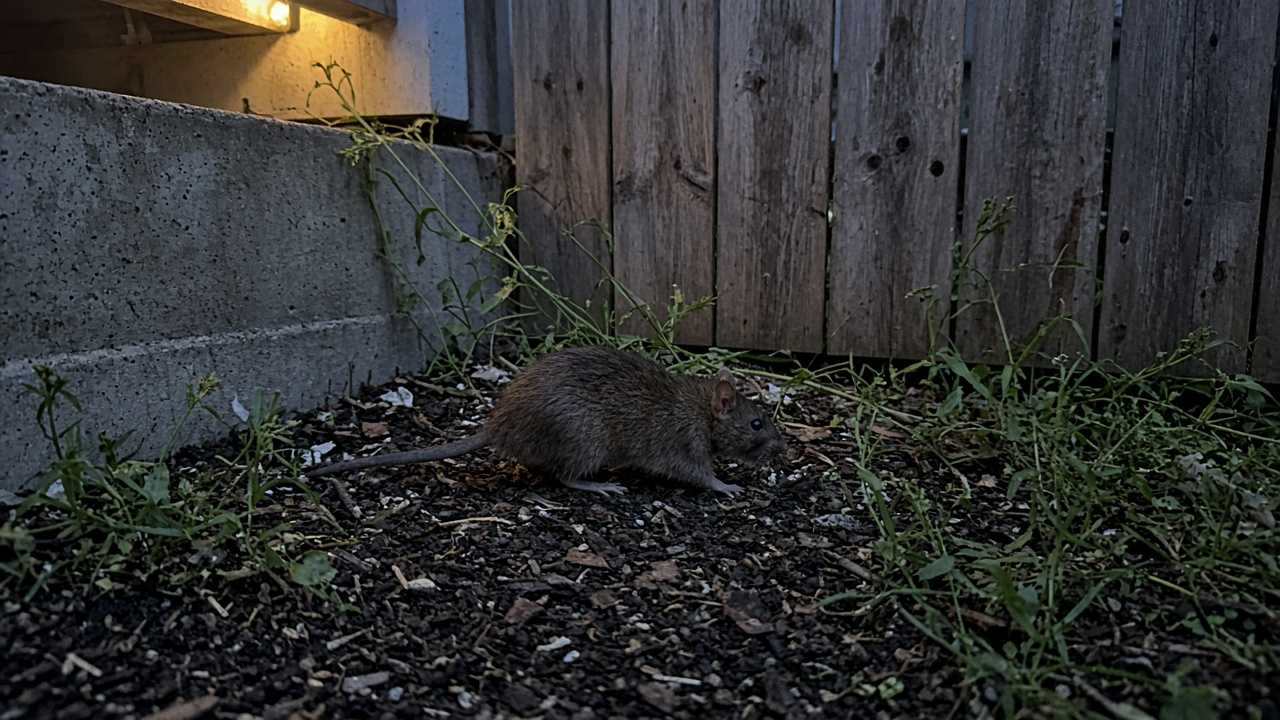
Pest ID: Norway rats and roof rats in Idaho (Rattus norvegicus and Rattus rattus)
Danger level: ModerateHow to recognize it
- Norway rat: large and heavy-bodied, blunt nose, small ears, tail shorter than the body, usually at ground level
- Roof rat: smaller and more agile, pointed nose, larger ears, a strong climber that may use trees and utility lines
- Droppings: much larger than mouse droppings, blunt rather than pointed
- Outdoor burrows, greasy rub marks, heavy gnawing, and sometimes attic noises or smudge marks
Where it shows up
- Yards, fence lines, decks, sheds and woodpiles
- Irrigation areas, canal banks and other places with water and cover
- Crawlspaces, garages and under porches
- Rooflines, attics and areas where tree limbs or utility lines meet the house
Common look-alikes
- House mouse or deer mouse
- Mice are much smaller, with rice-sized pointed droppings. A young rat has a large head and feet for its body.
- Native packrat or woodrat
- ISDA asks residents to use its comparison sheets before reporting a non-native rat. Do not assume every large rodent is a Norway or roof rat.
- Vole
- Voles stay in lawns, have short tails and leave surface runways. They rarely nest in buildings.
Why the danger rating: Idaho Health and Welfare describes several disease risks associated with rats, including illnesses spread by droppings, urine, fleas or bites. The department notes that Norway and roof rats do not carry the Sin Nombre hantavirus strain that causes lung disease in Idaho; deer mice are the main concern for that virus. Never sweep or vacuum droppings.
What has changed in Ada County
Rats are no longer only a topic for big coastal cities. In a May 14, 2026 article, the Idaho Department of Health and Welfare wrote that reports of rat sightings in the Treasure Valley have risen in recent years. It identifies the two common species in Idaho as the non-native Norway rat and the roof rat. Central District Health says rats have been reported in several Ada County communities, including Boise, Eagle and Garden City, and that the district coordinates public-health guidance — it does not provide extermination.
The Idaho State Department of Agriculture now offers an Idaho Rat Reporting Form so local governments can see the extent of those populations. ISDA also states that Norway and roof rats are not listed as invasive species in Idaho, so the department does not have authority or budget to take action on infestations. In October 2026 the City of Boise updated its nuisance ordinance to address attractants, with enforcement beginning December 1, 2026. The city does not trap rats on private property.
Use the civic guides for the official process: how to report rats, the Boise rat ordinance, and rats along canals and irrigation ditches. For mice, including deer mice and hantavirus-safe cleanup, see mice control in Boise. Start from the rodent control hub if you are still naming the animal.
Signs of rats around a property
- Large, blunt droppings in a garage, along a fence, in a crawlspace or in an attic
- Burrows under vegetation, a woodpile, a porch or a deck
- Heavy gnawing, greasy rub marks, or torn feed bags
- Noises in an attic or drop ceiling, or smudge marks on beams, which can point to climbing roof rats
Idaho Health and Welfare also mentions drowned rats in pools or hot tubs as a possible sign, and it recommends covering vents and rooftop plumbing pipes more than two inches in diameter with wire mesh. If activity looks like rice-sized droppings or garage seed raids in cold weather, compare that with house mice before you set rat-sized equipment.
Where rats nest around Boise properties
- Crawlspaces: quiet, dark and sheltered
- Garages and cluttered storage areas
- Outdoor burrows near foundations, landscaping or patios
- Attic spaces reached through roofline openings
Rats climb, dig and chew, so a provider’s inspection should cover both ground-level and roofline access.
Canals, yards and roofs
Central District Health recommends checking irrigation areas, canals, crawlspaces, decks, sheds and fence lines for leaks and hiding places, and it lists birdseed, chicken feed, pet food, garbage, compost and fallen fruit among common attractants. Officials at a September 2, 2026 Ada County meeting described canals as travel corridors; that does not make every ditch-side lot an infestation. An inspection should still include the roofline, because roof rats climb.
Where pressure tends to show up in the Treasure Valley
Older crawlspaces, alleys and fence lines: inspect burrows, debris and unsecured waste.
Irrigated mid-century lots and laterals: check carts, feed and bank vegetation.
River-corridor and irrigation-adjacent lots: walk fence lines and outdoor storage.
Drainage edges and stored feed at foothills-edge lots deserve a look, along with roofline gaps.
General patterns based on housing age, irrigation, and surrounding land use, not measured infestation rates.
Rat activity to watch through the year
Winter
Moderate
Activity can continue where food and shelter remain, including garages and crawlspaces.
Spring
Moderate
Outdoor breeding picks up. A good time to reduce harborage along fences and banks.
Summer
Moderate
Fallen fruit, unsecured compost and outdoor feeding are common attractants.
Fall
Peak
Cooler weather and leftover garden produce can concentrate activity near houses.
How rat control usually works
Rats are cautious about new objects, so a rushed one-night trap placement often fails. A careful job maps runways, removes food, places traps or tamper-resistant stations where rats already travel, and then seals entry points so the next animals cannot replace the ones you removed. Indoor poison can leave carcasses in walls; CDH advises against indoor poison for that reason. If insulation in an attic has been soiled, see rodent attic cleanup.
If you need to log a sighting, see how to report rats in Boise. City trash, compost and rental rules are in the Boise rat ordinance guide. Homes along ditches should also read rats along canals. Smaller, rice-sized droppings usually point to mice instead; see trapping and excluding house mice. Gnaw marks, rub marks and burrows are covered in our guide to spotting infestation signs. Outdoor attractant steps on irrigated lots are covered in the Central Bench pest guide. Contaminated attic insulation is a separate step — see rodent attic cleanup and the attic restoration hub.
How professional rat control works in Boise
- 1Inspect
Check the foundation, crawlspace, garage, fence line, irrigation edge and roofline for droppings, burrows, gnawing and entry gaps.
- 2Identify
Separate Norway rats, roof rats, mice and native rodents, and decide whether the activity is outdoors, in the structure, or both.
- 3Treat
Place traps or tamper-resistant stations along active runways, then monitor and adjust. Removal without exclusion is usually temporary.
- 4Prevent
Seal gaps, secure food and waste, and report sightings so local officials have better information.
DIY vs. calling a pro
Reasonable to handle yourself
- Secure trash, compost, pet food and seed, and pick up fallen fruit
- Walk the yard and canal-side fence for burrows and debris
- Set rat-sized snap traps along walls, out of reach of children, pets and wildlife
- Report a confirmed or suspected sighting through the official form and map
Time to call a licensed provider
- Burrows, large droppings or heavy gnawing at the house
- Attic or roofline activity that may be roof rats
- Activity that continues after careful trapping
- Cleanup of a heavily soiled crawlspace or attic
Loose poison bait can harm pets and wildlife and can leave rats dying in wall voids. If bait is used at all, it belongs in a secured, tamper-resistant station.
Sources
What makes rats different in the Treasure Valley
Rats seek food, water and shelter. Central District Health recommends checking irrigation areas, canals, crawlspaces, decks, sheds and fence lines for leaks and hiding places. Proximity to a canal alone does not establish whether a property has a rat problem.
Food sources are typically outdoors: backyard chickens and their feed, compost bins, fallen fruit, pet food left on patios and spilled birdseed. On rural and ag-edge parcels around Nampa, Caldwell and Kuna, barns, feed storage and equipment yards offer shelter year-round.
Burrows often appear under sheds, decks, concrete pads and woodpiles, and in canal banks. In winter, rats may move into garages and crawlspaces. Confirm the animal using the burrow before choosing a control method.
Rats are not only a rural-property issue here. Central District Health reports sightings in Boise, Eagle and Garden City, while Idaho Health and Welfare describes both Norway rats and roof rats in Idaho. Burrows suggest one inspection route; roofline entry, branches and attic signs suggest another. Neither pattern is a diagnosis on its own.
Near the Boise River Greenbelt or an irrigation lateral, concentrate prevention on the private property: secure chicken feed and birdseed, pick up fallen fruit and clear shelter near sheds. Coordinate with adjacent owners, and refer persistent activity around sewer or utility corridors to the appropriate utility or a licensed plumber rather than assuming yard baiting will fix a broken line.
Frequently asked questions
Are rats common in Boise, Idaho?+
Idaho Health and Welfare wrote in May 2026 that reports of rat sightings in the Treasure Valley have risen in recent years, and that the two common rat species in Idaho are the non-native Norway rat and the roof rat. Central District Health says rats have been reported in several Ada County communities, including Boise, Eagle and Garden City. Those reports support awareness and inspection; they are not a measured infestation rate for every neighborhood.
How do I tell if I have rats vs. mice in my Boise home?+
Rat droppings are much larger than mouse droppings — about the size of a raisin or bigger, and blunt. Mouse droppings are about the size of a grain of rice and pointed. Rats also leave larger gnaw marks, greasy rub marks and, outdoors, burrows. A young rat can be mistaken for a large mouse; look at the head and feet, which look oversized on a juvenile rat.
What is the difference between a Norway rat and a roof rat?+
Idaho Health and Welfare describes the Norway rat as a heavier “sewer or street rat” that thrives where food, water and shelter are available, including residential neighborhoods. Roof rats are smaller, more agile climbers that can reach attics and roofs by way of trees and utility lines. An inspection should include both ground-level burrows and the roofline.
How do I report rats in Boise or Ada County?+
Use the Idaho State Department of Agriculture’s rat reporting form and the Treasure Valley Pied Piper map that Central District Health and the City of Boise point residents to. Reporting is for information. The city and the health district do not provide extermination on private property. Our reporting guide has the official links.
Where should I check for rats in Boise, Eagle or Garden City?+
Central District Health recommends checking food sources, irrigation areas, canals, sheds, crawlspaces, decks, fence lines and entry gaps, and it notes that roof access matters as well. A canal-side burrow is not the only possible sign, and a canal next door is not automatic proof of an infestation.
Licensing in Idaho: how to verify a provider
In Idaho, professional pesticide applicators are licensed by the Idaho State Department of Agriculture (ISDA). To get licensed, they pass an exam for each category of work they do and show proof of financial responsibility. Since ISDA's 2024 rule update, home and building pest work for insects, spiders and wood-destroying pests such as termites falls under the Industrial, Institutional, and Structural Pest Control – Non-Commodity (IP) category. Rodent work may also involve General Vertebrate Control (GV). (ISDA license categories)
Before you hire anyone, ask for the applicator's name and license number. Check that the license is current, and that it covers the right category, with ISDA's Certified Applicator License Search, or call ISDA pesticide licensing at (208) 332-8600. Also ask what products they plan to use, and ask for the label or safety data sheet if you have kids, pets, or a well.