Spider Control in Boise, ID: Safe Removal & Prevention
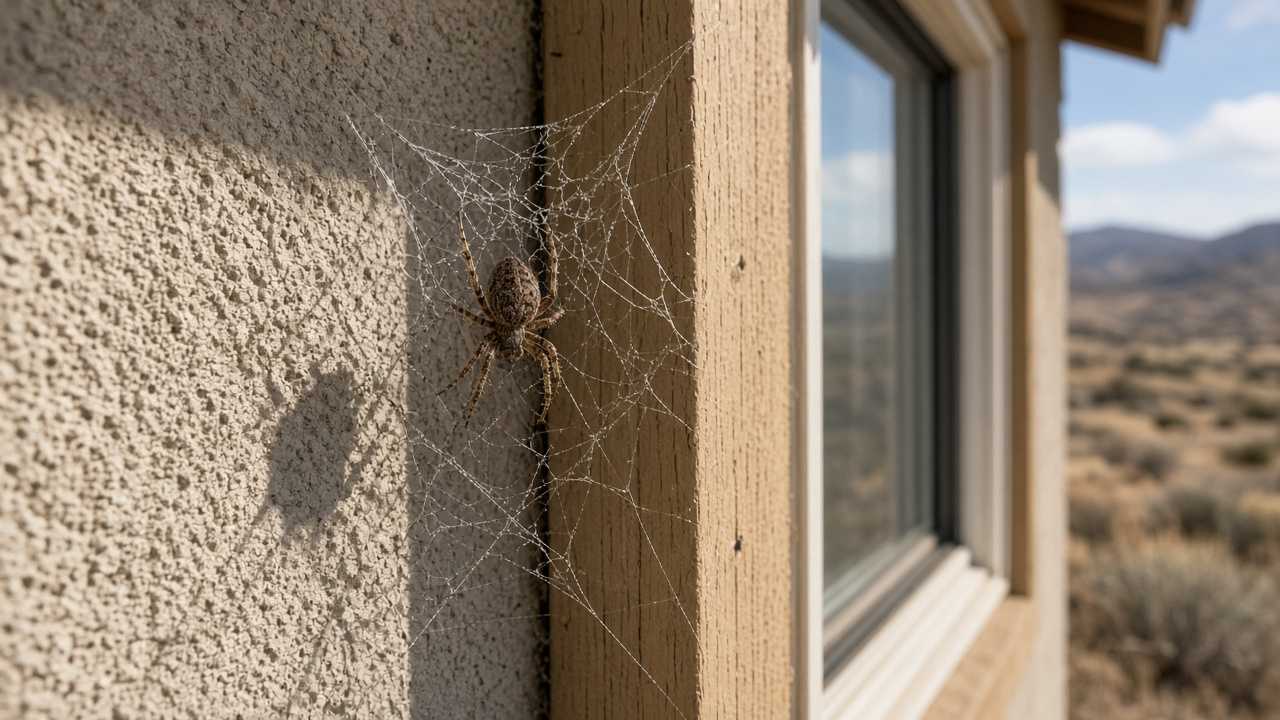
Pest ID: Common house spiders in the Treasure Valley
Danger level: ModerateHow to recognize it
- Wolf spiders: large, hairy, fast runners that hunt on the ground and don't build webs
- Hobo and giant house spiders: brown, long-legged, and they build funnel webs low in basements and window wells
- Cellar spiders: very long thin legs and a small body, in loose webs in ceiling corners
- Jumping spiders: small and compact with large front eyes, often on window sills
- Black widow: glossy black with a red hourglass under the abdomen and a messy, low web
Where it shows up
- Garages, especially floor-level corners and stored boxes
- Basements, crawlspaces and window wells
- Exterior eaves, porch lights and door frames
- Woodpiles, sheds, irrigation valve boxes
Common look-alikes
- Hobo spider vs. giant house spider
- Nearly impossible to tell apart without magnification. Both are funnel-web builders, and current research (WSU Extension) has not shown either to be harmful to humans.
- Wolf spider vs. "brown recluse"
- Wolf spiders are bulkier and hairier, with a striped pattern. Brown recluses are not found in Idaho (University of Idaho Extension).
- Black widow vs. false widow / other dark spiders
- Only the black widow has the red hourglass under a shiny, round abdomen. Immature widows are brown with orange and white markings.
Why the danger rating: Most Boise house spiders are harmless nuisances. The rating is 'moderate' only because black widows are common locally and their bites need medical care.
Spiders common in Boise homes
Several spider species are active in Treasure Valley homes, and most of them help more than they hurt by eating flies, moths and other insects. Knowing which one you have tells you how much to worry and what kind of treatment makes sense.
- Wolf spiders are large and fast. They wander indoors in late summer and fall, often coming under doors and garage seals. They don't build webs, so you'll see them on floors rather than in corners.
- Hobo spiders are common throughout the Treasure Valley at ground level in basements, crawlspaces and window wells, because their feet aren't built for climbing smooth vertical surfaces. Hobo spiders were once blamed for serious necrotic bites. Later research didn't hold up: a 2014 study of 33 verified spider bites in Oregon found no serious symptoms or tissue death, and the one verified hobo bite cleared up within 12 hours. WSU Extension now says research has not shown hobo spiders to be harmful to humans.
- Cellar spiders ("daddy long-legs" spiders) build loose webs in basements, crawlspaces and dark storage areas. They're harmless but can build up large numbers of webs.
- Jumping spiders are small and active, and they're often seen near sunny windows. They're harmless.
- Black widows are less common indoors but are the one Treasure Valley spider that warrants real caution. University of Idaho Extension lists it as the only medically important spider in Idaho. See our full black widow spiders in Boise guide for identification and bite guidance.
Brown spiders on garage floors and in basements are often wolf, hobo or giant house spiders. For a side-by-side identification guide, and a current look at hobo-bite research, see hobo vs. wolf spiders in Boise.
Signs of a spider problem
- Webs that come back quickly in corners, garages and exterior eaves
- Frequent sightings along baseboards, in tubs and sinks, or near ceilings
- Egg sacs behind boxes, in storage areas or in window wells
- A jump in activity when temperatures change in fall
If you're seeing spiders repeatedly, the cause is usually habitat and food supply, not bad luck.
Why spiders are common in Boise
Boise sits where high desert meets irrigated farmland and the Boise River corridor. That mix supports a lot of insects, and insects are what spiders follow. Garages, crawlspaces, basements and window wells provide sheltered places to inspect, but different spider species have different seasonal habits.
- Irrigated yards create insect pressure. More insects near the foundation means more spiders.
- Exterior lighting attracts prey. Porch and garage lights pull insects in at night, and web-building spiders set up nearby.
- Older homes have more entry points. Cracks, gaps and weathered siding make it easy to get in.
- Cold snaps drive movement. Check door seals before cold weather, without assuming all indoor spiders moved in from outdoors.
Where pressure tends to show up in the Treasure Valley
Older homes, crawlspaces, basements and mature landscaping offer many gaps and sheltered corners to inspect.
Rock walls, retaining walls and storage near open foothills ground deserve a flashlight check.
Irrigated lawns and landscape beds support insect prey. Watch garage door seals and window wells.
Patio storage and undisturbed corners on river-corridor lots are practical inspection points.
General patterns based on housing age, irrigation, and surrounding land use, not measured infestation rates.
Seasonal calendar
Winter
Low
Mostly hidden in basements, crawlspaces and garages.
Spring
Low
Activity resumes outdoors as insects return.
Summer
Moderate
Webs build up around lights, eaves and window wells.
Fall
Peak
Wandering males may be noticeable; species and shelter matter.
Why spider problems keep coming back
- Outdoor lights attracting insects near doors and windows
- Bushes or trees touching siding and creating "bridges" into the home
- Cluttered garages or storage areas that provide shelter
- Gaps around doors, windows, vents and utility penetrations
- Moisture problems that support insect populations
Until these conditions change, spiders are likely to return no matter what gets sprayed. When you need an inspection, compare providers for spider inspections and ask how each one will address webs, prey insects and entry points.
For a closer comparison of hobo, wolf and giant house spiders, including current research on hobo bites, see hobo vs. wolf spiders in Boise. Not sure whether webs and egg sacs are the whole story? Our guide to early warning signs around the house helps you rule out other pests. And if you are comparing providers, see what shapes the price of spider treatment. Foothills-edge storage tips appear in the Highlands and Harris Ranch guides.
How professional spider control works in Boise
- 1Inspect
Check hotspots: garages, basements, crawlspaces, window wells, eaves, and exterior lighting where insects gather.
- 2Identify
Confirm which spiders are present, and especially whether black widows are involved, because that changes the urgency and where the work is focused.
- 3Treat
Remove webs and egg sacs where practical, then treat key travel zones and insect-attraction areas to reduce both spiders and their food supply.
- 4Prevent
Seal gaps, adjust lighting, trim vegetation and cut clutter so fewer insects and spiders can settle near the home.
How a spider barrier (perimeter) treatment is applied
- Foundation (treated surface)
- Eaves (treated surface)
- Window frames (treated surface)
- Remove webs and egg sacs
- Seal gaps around doors, windows and the foundation
- Reduce outdoor lights that attract insects
- Trim plants off the siding
A “spider barrier” is a product applied to surfaces spiders and their prey cross, not a physical wall. It works best with web removal, sealing and lighting changes.
DIY vs. calling a pro
Reasonable to handle yourself
- Vacuum webs and egg sacs indoors, and dispose of the bag outside
- Knock down exterior webs regularly, especially around lights and eaves
- Switch to outdoor bulbs that attract fewer insects
- Trim plants away from siding and clear stacked items off the foundation
- Repair screens, door sweeps and garage door seals
- Use sticky traps in basements and garages to monitor activity
Time to call a licensed provider
- You find black widows inside living areas, or repeatedly in the garage
- Spider activity persists after you have cut clutter and sealed gaps
- Crawlspaces or window wells hold many webs or egg sacs
- Someone in the home is at higher risk from a bite (young children, elderly, health conditions)
Over-the-counter sprays kill spiders on contact but rarely last long or reach where spiders hide. Reducing insects and entry points does more than spraying alone.
What makes spiders different in the Treasure Valley
The biggest local factor is timing. Boise has hot, dry summers and cold-season weather, but different spiders respond differently. Wandering males may be more noticeable in late summer and fall; indoor webs can belong to spiders already living in the building. Repair screens and door seals whenever gaps are found rather than waiting for a single treatment month.
Newer subdivisions bring their own pattern. Egress window wells, decorative rock beds against the foundation and gaps around hose bibs and dryer vents give spiders a protected space right next to the walls. Tighter construction keeps many of them out of living areas, so they collect in window wells and garages instead.
If spiders keep appearing indoors through winter, inspect for insect prey and sheltered hiding places rather than assuming each one has just come in from outside.
For a home near the Greenbelt in Southeast Boise or Garden City, start with screens, exterior lights and storage beside the house, not a blanket treatment of riverbank habitat. The Greenbelt is a wildlife corridor; being near it does not establish which spider is in your garage.
In an older East End or Warm Springs home, inspect basement windows and accessible gaps around utilities. In new construction in Harris Ranch, Eagle or Star, check door sweeps and window wells too. A brown funnel-web spider needs identification: hobo and giant house spiders can look alike, and hobo spiders are not considered a medically important threat.
Frequently asked questions
Are spiders in Boise dangerous?+
Most spiders in Treasure Valley homes are harmless to people, including wolf, jumping, cellar, giant house and hobo spiders. University of Idaho Extension identifies the black widow as the only medically important spider in Idaho. Be careful around it, especially in garages, sheds, woodpiles and crawlspaces.
When is spider season in Boise, ID?+
Wandering spiders may be more noticeable in late summer and fall, but there is no single season for every species. Check a North End basement window or a Harris Ranch garage seal when sightings begin. Indoor web builders may already live inside; repeated sightings do not prove that cold weather drove them in.
Do brown recluse spiders live in Boise?+
No. According to University of Idaho Extension, brown recluse spiders are not known to be found in Idaho or the Pacific Northwest, and their known range is far from Boise. Brown spiders mistaken for recluses are usually hobo, giant house, wolf or other common spiders. If you want a specimen confirmed, use the free Idaho Insect Identification service.
How do I get rid of spiders in a Boise home?+
Start by vacuuming webs and egg sacs, reducing outdoor lights that attract insects, trimming plants off the siding, and sealing gaps around doors, windows and the foundation. Those steps remove hiding places and cut the prey spiders follow indoors. If webs keep coming back, or you are finding black widows, a licensed provider can combine web removal with a perimeter treatment and an inspection of garages, crawlspaces and window wells.
What is a spider barrier treatment?+
Some providers describe a residual perimeter treatment as a spider barrier. It is a treatment applied along the foundation, eaves, window frames and other surfaces spiders and their prey cross — not a physical wall. It works best together with web removal, sealing gaps, and reducing outdoor lights that attract insects. Ask what surfaces will be treated and how long the product is meant to last.
Licensing in Idaho: how to verify a provider
In Idaho, professional pesticide applicators are licensed by the Idaho State Department of Agriculture (ISDA). To get licensed, they pass an exam for each category of work they do and show proof of financial responsibility. Since ISDA's 2024 rule update, home and building pest work for insects, spiders and wood-destroying pests such as termites falls under the Industrial, Institutional, and Structural Pest Control – Non-Commodity (IP) category. Rodent work may also involve General Vertebrate Control (GV). (ISDA license categories)
Before you hire anyone, ask for the applicator's name and license number. Check that the license is current, and that it covers the right category, with ISDA's Certified Applicator License Search, or call ISDA pesticide licensing at (208) 332-8600. Also ask what products they plan to use, and ask for the label or safety data sheet if you have kids, pets, or a well.