Termite Control in Boise, ID: Signs, Inspection & Treatment
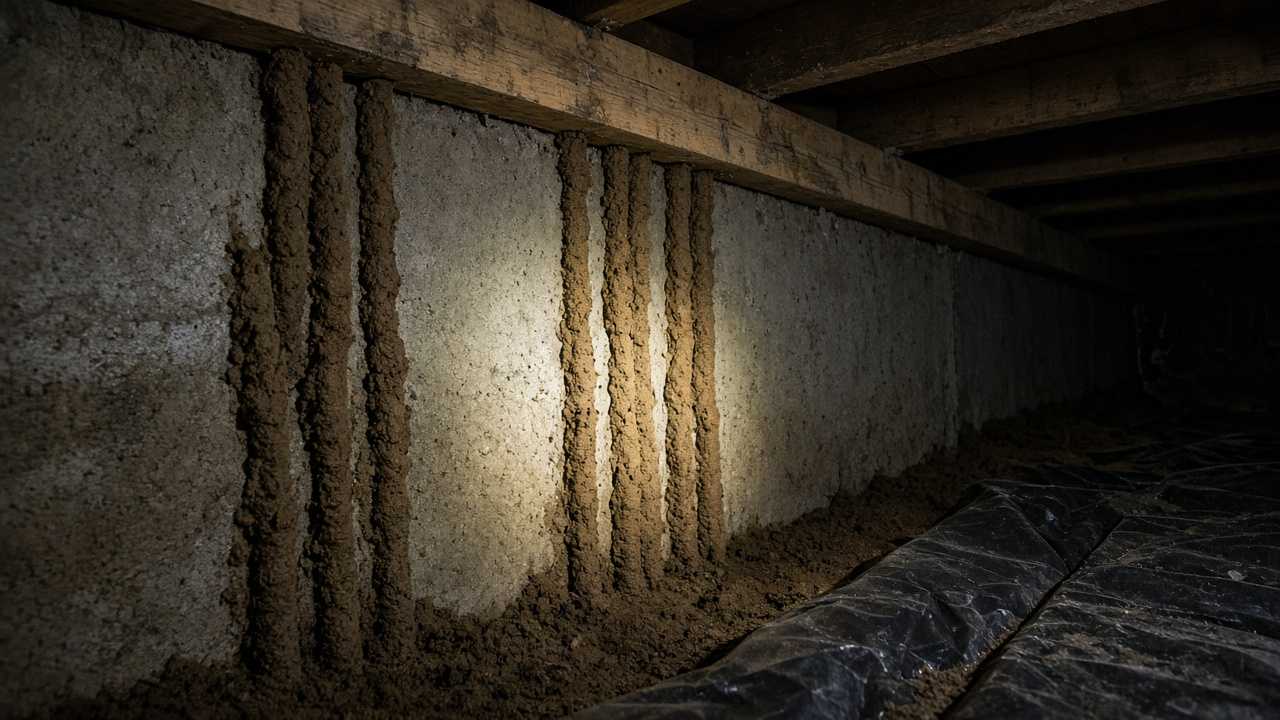
Pest ID: Subterranean termites (Reticulitermes spp., e.g. western subterranean termite, R. hesperus)
Danger level: HighHow to recognize it
- Workers: small, soft, cream-colored, and rarely seen in the open
- Swarmers: dark, winged reproductives, often in spring after warm weather
- Mud tubes: pencil-width earthen tunnels running up the foundation or piers
- Damaged wood: galleries that run with the grain, packed with soil
Where it shows up
- Crawlspaces, sill plates and floor joists
- Wood that touches soil: decks, porch steps, fence posts, door frames
- Slab cracks, expansion joints and plumbing penetrations
- Areas kept damp by irrigation, leaks or poor drainage
Common look-alikes
- Winged ants
- They have elbowed antennae, a pinched waist, and front wings longer than the back wings. Termites have straight antennae, a broad waist and equal wings.
- Carpenter ant damage
- Carpenter ants leave clean, smooth galleries and push out sawdust-like frass. Termite galleries are rough and packed with mud.
- Wood rot
- Rot is soft and stringy or cracked into cubes, with no tunnels or mud. It often sits alongside termite damage because both need moisture.
Why the danger rating: Termites don't threaten people, but they cause structural damage that is usually far more expensive to repair than to prevent or catch early.
Signs of termites in a Boise home
- Mud tubes on foundation walls, crawlspace piers, or behind stored items against the wall. Break one open: active tubes are often rebuilt within days.
- Swarmers or discarded wings on window sills, in light fixtures, or near doors, typically in spring.
- Hollow-sounding or blistered wood, paint that bubbles, or baseboards that crumble when pressed.
- Sticking doors or windows and sagging floors can have many causes, but they're worth checking if other signs are present.
Because subterranean termites travel through soil and inside wood, many infestations are only found during an inspection, home sale, or remodel. Don't assume no visible signs means no termites.
Need a wood-destroying insect inspection for a home sale, or a closer look at what inspectors check in crawlspaces, slabs and foundations? See our termite inspection in Boise guide. Treatment options — liquid soil treatments and bait systems — stay on this page.
Where to look for termite signs in a Boise home
- Mud tubes on foundation walls or crawlspace piers
- Mud tubes behind stored items against a wall
- Swarmers or discarded wings on window sills or near doors
- Hollow-sounding or blistered wood, bubbling paint, crumbling baseboards
- Sticking doors or windows and sagging floors (many causes; check with other signs)
Subterranean termites travel through soil and inside wood, so many infestations are only found during an inspection. No visible signs does not mean no termites.
Why termites are a risk in Boise
University of Idaho Extension reports subterranean termites statewide in Idaho except the Panhandle and high mountain country. They damage wood that's in close contact with soil, and they return to the soil daily unless the wood is damp. Native high-desert soil is dry, which termites don't love. But the Treasure Valley's irrigation changes that around homes. Watered lawns, landscape beds and sprinkler heads aimed at the foundation keep soil moist where it meets the house, and that is exactly where subterranean termites forage.
- Irrigation against the foundation creates moist soil termites prefer.
- Older homes with crawlspaces, common on the Bench and in the North End, often have wood close to soil and ventilation or moisture problems.
- Wood-to-soil contact from decks, steps, planters and stored firewood gives termites a direct path.
- Homes near the Boise River and canals may have higher soil moisture year-round.
Where pressure tends to show up in the Treasure Valley
Older crawlspace homes and aging sill plates: inspect wood-to-soil contact and moisture, not a neighborhood ranking.
Mid-century stock with irrigated yards: check grading, laterals and any wood against soil.
River-corridor moisture context: confirm drainage and screened openings after high water.
Sloped lots and decks: inspect wood members near soil and irrigation overspray.
General patterns based on housing age, irrigation, and surrounding land use, not measured infestation rates.
Termite seasonal calendar
Winter
Low
Colonies keep working below the frost line, out of sight.
Spring
Peak
Swarm season. Winged termites emerge, often after warm weather.
Summer
Moderate
Active foraging in irrigated soil along foundations.
Fall
Low
Activity slows. A good time for a crawlspace check.
If you need a wood-destroying insect inspection for a home sale, or a closer look at what inspectors check, see our termite inspection in Boise guide. Treatment options stay on this page. Large black ants and clean, smooth galleries usually point to carpenter ants rather than termites. Winged insects indoors in spring could be either, so compare them with our Boise ant guide before you decide on treatment.
How termite inspection and treatment work
- 1Inspect
A licensed inspector checks the foundation, crawlspace, garage, slab edges and any wood-to-soil contact, then documents mud tubes, damage and moisture problems.
- 2Identify
Confirm termites versus carpenter ants or rot, and map where activity is coming from. The written report should show findings on a diagram.
- 3Treat
Either a liquid soil treatment around the foundation, often with drilling at slabs, or a bait system with monitoring stations. Some homes use both.
- 4Prevent
Break wood-to-soil contact, fix drainage and irrigation, ventilate crawlspaces, and keep up annual inspections and any warranty monitoring.
Liquid treatment vs. bait systems
Liquid soil treatments put a treated zone in the soil around and sometimes under the foundation, so termites that forage through it are killed or blocked. They can act quickly but need thorough application, including trenching and sometimes drilling through slabs or patios.
Bait systems use stations placed in the soil around the house. Once termites find them, a slow-acting bait is shared through the colony. They're less invasive but depend on regular monitoring visits, so ask how often stations are checked and what happens if activity is found.
Neither option is right for every home. Ask any provider to explain why they're recommending one, what the warranty covers (retreatment only, or repairs too), and how long it lasts. Use the directory to research providers before requesting termite quotes, then confirm termite inspection and treatment experience directly.
Prevention for Treasure Valley homes
- Point sprinklers away from the foundation and fix leaking hoses and drip lines
- Keep gutters clear and make sure downspouts and grading move water away from the house
- Store firewood off the ground and away from the house
- Keep wood siding, trim and deck posts from touching soil
- Keep crawlspace vents clear, and fix plumbing leaks quickly
- Schedule regular professional inspections, especially for older crawlspace homes. See what a Boise termite inspection typically covers
For pricing context, see our pest control cost guide. If you're unsure whether you're looking at termite or carpenter ant damage, see the signs of pest infestation guide.
DIY vs. calling a pro
Reasonable to handle yourself
- Fix drainage, irrigation overspray and leaks
- Break wood-to-soil contact and move firewood
- Check your foundation and crawlspace for mud tubes a few times a year
- Save a sample of any swarmers in a sealed bag for identification
Time to call a licensed provider
- Any mud tubes, swarmers indoors, or damaged wood
- Buying or selling a home (a wood-destroying insect inspection is often requested)
- Treatment of any kind. Termite treatment needs equipment and products that DIY kits can't match
- Ongoing monitoring of a bait system or warranty
Retail termite products rarely give whole-structure protection. With termites, the cost of guessing wrong is structural damage.
What makes termites different in the Treasure Valley
Subterranean termites generally obtain moisture through soil contact; damp structural wood can sometimes support activity without that connection. In a dry climate, the moist zones next to a house are often man-made: sprinklers soaking the foundation, downspouts emptying against the wall, and soil or bark mulch piled up over the siding line. Fixing those spots is one of the most useful things a homeowner can do.
Construction details matter. Foam board insulation and stucco or stone veneer that run below grade can hide mud tubes completely, so termites may go unseen until they show up inside. Wood fences, planter boxes and deck posts set directly in irrigated soil can also host colonies close to the house.
Swarms are most often seen on warm days in spring, often after a rain, and that is often the first visible sign. Winged termites indoors near windows or a basement wall are worth a professional inspection, even if they are only seen once.
Do not rule out termites because Boise is high desert. University of Idaho’s archived subterranean-termite guide documents their presence in Idaho outside the Panhandle and high mountains. For a Bench crawlspace or a newer Meridian or Star home, the useful questions are about wood-to-soil contact, plumbing leaks, drainage and access for inspection—not a neighborhood risk score.
For river-adjacent homes in Garden City or Eagle, ask an inspector to assess the actual site moisture instead of assuming the river makes every foundation damp. Photograph suspected tubes and save a swarmer for identification. The same inspection should distinguish termite damage, carpenter-ant galleries and wood decay before treatment is priced.
Sources for this local guidance
Frequently asked questions
Do termites exist in Boise, Idaho?+
Yes. University of Idaho Extension reports that subterranean termites are found statewide in Idaho except the Panhandle and high mountain country, and they can damage Boise homes. They work slowly and out of sight, so damage often goes unnoticed for a long time. Regular inspections matter more than anything else.
How do I know if my Boise home has termites?+
The most reliable signs are mud tubes on foundation walls, piers or wood supports; wood that sounds hollow or breaks open to show mud-packed galleries; and swarms of winged insects, or piles of their shed wings, near windows and doors in spring.
What termite treatment options are there?+
The two main approaches for subterranean termites are a liquid soil treatment around and under the foundation and a baiting system with monitoring stations. Which one fits depends on the house, the infestation and the warranty. A licensed inspector should explain the tradeoffs.
What happens during a termite inspection in Boise?+
A typical inspection covers the foundation, crawlspace or basement, mud-tube checks on piers and siding, and wood that contacts soil. The inspector may also note crawlspace moisture and ask about past swarmers. In Boise this is often requested during a home sale as a wood-destroying insect inspection, but you can ask for one anytime you see tubes, wings or damaged wood. Ask what areas will be inspected and whether a written report is included. Our termite inspection in Boise guide covers those checks, WDI reports and what happens after the visit.
What is termite monitoring?+
Termite monitoring usually means in-ground stations placed around the foundation and checked on a schedule. If termites show up in a station, the provider may switch in a slow-acting bait or recommend a soil treatment. Monitoring is also used after treatment as part of a warranty. It is not the same as a one-time visual inspection, so ask how often stations are checked and what happens if activity is found.
Licensing in Idaho: how to verify a provider
In Idaho, professional pesticide applicators are licensed by the Idaho State Department of Agriculture (ISDA). To get licensed, they pass an exam for each category of work they do and show proof of financial responsibility. Since ISDA's 2024 rule update, home and building pest work for insects, spiders and wood-destroying pests such as termites falls under the Industrial, Institutional, and Structural Pest Control – Non-Commodity (IP) category. Rodent work may also involve General Vertebrate Control (GV). (ISDA license categories)
Before you hire anyone, ask for the applicator's name and license number. Check that the license is current, and that it covers the right category, with ISDA's Certified Applicator License Search, or call ISDA pesticide licensing at (208) 332-8600. Also ask what products they plan to use, and ask for the label or safety data sheet if you have kids, pets, or a well.