Hobo vs. Wolf Spiders in Boise, ID
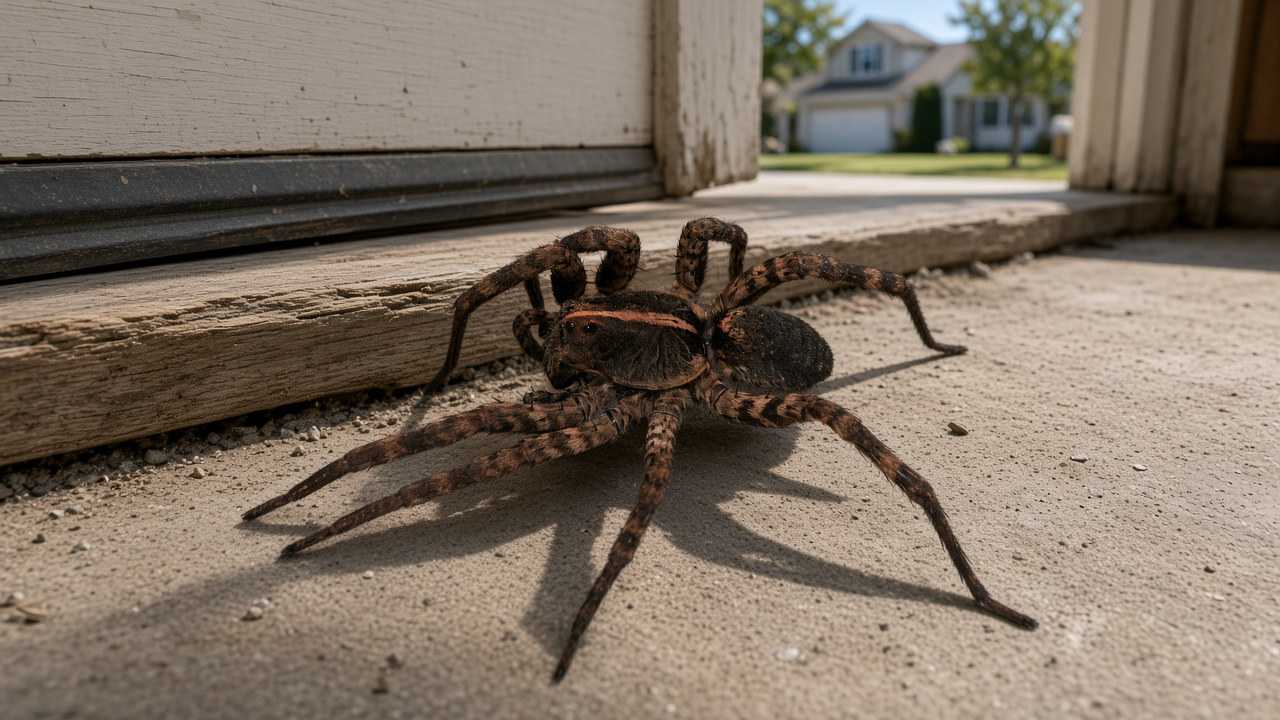
How to tell them apart
Three brown spiders are commonly mixed up in Treasure Valley homes: the hobo spider (Eratigena agrestis, formerly Tegenaria agrestis), wolf spiders (family Lycosidae), and giant house spiders (the Eratigena atrica group). General prevention is covered in our spider control in Boise guide. This page is the identification and bite-science comparison.
Wolf spiders
Wolf spiders are hunters. They do not spin a web to catch prey. The body is stout and hairy, the legs are relatively thick, and the eyes are the giveaway if you can look safely from a short distance or a photo: two large facing eyes, with a row of smaller eyes in front. They run across garage floors, basements and door thresholds, especially in late summer and fall. A female may carry a round egg sac attached to her spinnerets, and later may carry spiderlings on her back. That habit is not something hobo or giant house spiders do.
Hobo spiders
Hobo spiders build a funnel web at ground level — in a basement corner, crawlspace, window well or clutter along the foundation. Adults are light to medium brown, with a chevron or herringbone pattern on the abdomen and relatively even-colored legs. Their feet are not built for climbing smooth vertical surfaces, so you are more likely to find them low than on a ceiling. The nickname “aggressive house spider” is a mistranslation of the species name agrestis, which means rural, not a description of behavior.
Giant house spiders
Giant house spiders are close relatives of the hobo and also build funnel webs. They are often larger and more mottled, with more obviously banded legs, and they climb better. Washington State University Extension and other regional guides note that non-experts often cannot reliably tell a hobo from a giant house spider without magnification. If you need a confirmed identification, photograph the spider and consider the free Idaho Insect Identification service rather than relying on a casual look.
Hobo, wolf and giant house spiders compared
- Hobo: light to medium brown with a chevron or herringbone pattern on the abdomen
- Hobo spiders build funnel webs at ground level and are poor climbers of smooth walls
- Wolf spider: stout and hairy, with a distinctive eye pattern
- Wolf spiders hunt on floors and do not spin a capture web; females may carry an egg sac
- Giant house spider: often larger and mottled, with more banded legs, also a funnel-web builder
- Hobo vs. giant house spider usually cannot be confirmed without magnification
Drawings are not to scale. “Aggressive house spider” is a mistranslation of the hobo’s scientific name (agrestis, meaning rural), not a description of behavior.
What current research says about hobo spider bites
Hobo spiders were once widely blamed for necrotic, or tissue-killing, bites in the Intermountain West. That older claim does not hold up under later research, and it should not be repeated as current fact.
Utah State University Extension reports that there is no significant evidence hobo spider venom causes necrosis in people, and that the CDC does not list the hobo spider among spiders whose venom is considered toxic to humans. A 2014 study of 33 verified spider bites in Oregon found no serious symptoms or tissue death; the one verified hobo bite in that series cleared up within 12 hours. WSU Extension now describes the hobo as a nuisance spider and states that research has not shown it to be harmful to humans.
University of Idaho Extension identifies the black widow as the only medically important spider in Idaho. Brown recluses are not established in the state. If you are trying to rule out a black widow — a shiny black spider with a red hourglass on the underside and a messy, low web — use our black widow spiders in Boise guide. Any bite that worries you deserves medical advice, but a brown spider in a Boise garage is far more likely to be a wolf, hobo or giant house spider than a medical emergency.
Where these spiders show up in Boise
Irrigated yards, porch lights and gaps under doors give both hunters and funnel-web builders a reason to use a garage or basement. Wolf spiders wander in at floor level. Hobo and giant house spiders set up in window wells, crawlspaces and cluttered corners close to the ground. Late summer and fall are when wandering adults are most noticeable, but indoor funnel webs can be present year-round in a sheltered space.
Where pressure tends to show up in the Treasure Valley
Older basements, crawlspaces and window wells are practical places to look for funnel webs.
Garage seals and storage on foothills-edge lots are common floor-level sighting spots.
Irrigated mid-century lots support insect prey; check garage doors and window wells.
Patio storage and undisturbed floor-level corners on river-corridor lots deserve a look.
General patterns based on housing age, irrigation, and surrounding land use, not measured infestation rates.
Hobo and wolf spider seasonal calendar
Winter
Low
Mostly hidden in basements, crawlspaces, garages and window wells.
Spring
Low
Activity resumes as insect prey returns outdoors.
Summer
Moderate
Funnel webs build in wells and ground-level corners; hunters forage at night.
Fall
Peak
Wandering adults, including wolf spiders and funnel-web males, are most noticeable indoors.
Control steps
The same habits that reduce spiders in general work here. Seal the gaps spiders use at floor level: door sweeps, garage door seals, and cracks into window wells and crawlspaces. Reduce clutter along walls and in the garage so you can see funnel webs and so hunters have fewer hiding places. Vacuum webs and egg sacs and empty the vacuum outside. Trim plants off the siding and adjust outdoor lights that draw insect prey to the door. Sticky traps along baseboards help you monitor what is actually moving at night.
Retail sprays kill a spider on contact but rarely reach the next one in a well or crawlspace, and they do not close the gap it used. If webs keep returning, or if you also have black widows, a licensed provider can inspect those sheltered spots and combine web removal with a perimeter treatment. Details on that approach are in the spider control guide.
General spider prevention — sealing gaps, reducing insect prey and removing webs — is covered in our Boise spider control guide. The one medically important spider in Idaho is the black widow; see black widow spiders in Boise if you need that identification.
How hobo and wolf spider control works
- 1Inspect
Check floor-level hotspots: garage thresholds, basements, crawlspaces, window wells and clutter along the foundation.
- 2Identify
Separate wolf spiders (hunters, no capture web) from funnel-web builders, and look carefully for black widows, which change the urgency.
- 3Treat
Remove webs and egg sacs where you can reach them safely. A provider may add a residual treatment on travel surfaces and prey-insect zones.
- 4Prevent
Seal door and garage gaps, reduce floor-level clutter, trim plants and cut outdoor lighting that attracts insects.
DIY vs. calling a pro
Reasonable to handle yourself
- Vacuum funnel webs and egg sacs and empty the vacuum outside
- Install or repair door sweeps and garage door seals
- Clear clutter along garage and basement walls
- Use sticky traps to monitor floor-level activity
- Photograph a spider you cannot identify rather than handling it
Time to call a licensed provider
- Webs or sightings continue after you have sealed gaps and reduced clutter
- Crawlspaces or window wells you cannot safely reach
- You also find black widows, or someone in the home is at higher medical risk from a bite
- You want a specimen identified rather than guessed at
Do not handle a spider to check markings. If you cannot tell what it is from a safe photo, treat a shiny black, round-bodied spider as a possible black widow.
Sources
Frequently asked questions
How can I tell a hobo spider from a wolf spider in Boise?+
Wolf spiders are stout, hairy hunters with a distinctive eye pattern and no capture web. You often see them running on garage or basement floors, and a female may carry an egg sac. Hobo spiders are slimmer funnel-web builders, usually light to medium brown with a chevron or herringbone pattern on the abdomen, and they stay near ground-level webs in basements, crawlspaces and window wells.
Do hobo spider bites cause necrotic wounds?+
Current research does not support the old claim that hobo spider bites cause necrotic, or flesh-eating, wounds. Utah State University Extension reports no significant evidence of that effect and notes that the CDC does not list the hobo spider among spiders whose venom is considered toxic to people. A 2014 study of verified bites in Oregon found no tissue death. Older warnings should not be treated as current medical fact.
Are hobo or wolf spiders dangerous in Idaho?+
University of Idaho Extension identifies the black widow as the only medically important spider in Idaho. Hobo, wolf and giant house spiders can bite if they are pressed or handled, and a bite can be locally painful, but they are not considered a serious medical threat. Anyone with a concerning reaction should seek medical advice. For black widow identification and bite steps, use our black widow guide.
How do I tell a hobo spider from a giant house spider?+
Both are related funnel-web builders, and non-experts often cannot tell them apart without magnification. Giant house spiders in the Eratigena atrica group are often larger and more mottled, with more obviously banded legs, and they climb better than hobos. If identification matters, photograph the spider and use the University of Idaho insect identification service rather than guessing from a phone picture alone.
How do I control hobo and wolf spiders in a Boise home?+
Seal gaps under doors, at garage seals and around window wells; reduce clutter at floor level; vacuum funnel webs and egg sacs; and cut the insects that attract spiders by adjusting outdoor lights and trimming plants off the siding. Sticky traps can help you monitor activity. A licensed provider can inspect crawlspaces and wells if webs keep coming back. Spraying alone rarely lasts.
Licensing in Idaho: how to verify a provider
In Idaho, professional pesticide applicators are licensed by the Idaho State Department of Agriculture (ISDA). To get licensed, they pass an exam for each category of work they do and show proof of financial responsibility. Since ISDA's 2024 rule update, home and building pest work for insects, spiders and wood-destroying pests such as termites falls under the Industrial, Institutional, and Structural Pest Control – Non-Commodity (IP) category. Rodent work may also involve General Vertebrate Control (GV). (ISDA license categories)
Before you hire anyone, ask for the applicator's name and license number. Check that the license is current, and that it covers the right category, with ISDA's Certified Applicator License Search, or call ISDA pesticide licensing at (208) 332-8600. Also ask what products they plan to use, and ask for the label or safety data sheet if you have kids, pets, or a well.