Mice in Walls in Your Boise Home — What to Do
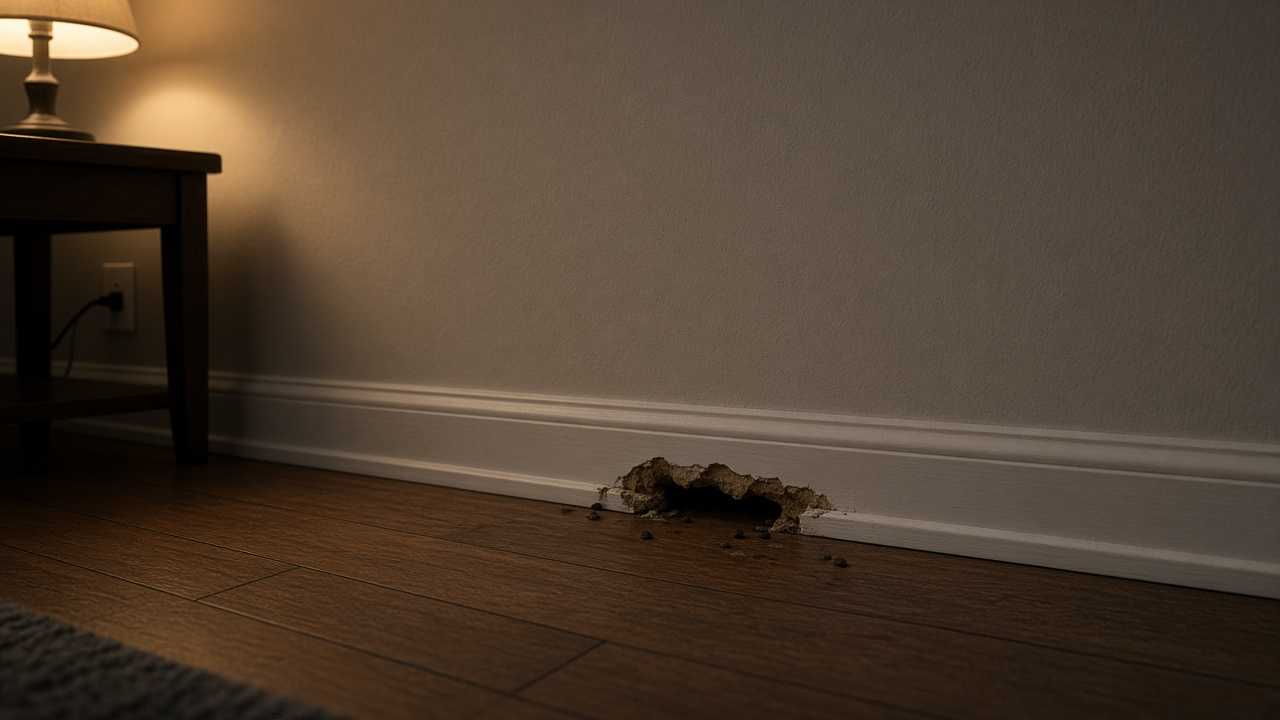
Mice in walls in a Boise home is one of the most common winter pest calls in the Treasure Valley — and one of the most urgent. That scratching sound at night isn’t random. It’s an established mouse moving through wall voids, and where there’s one, there are almost always more. The longer you wait, the larger the infestation grows. For a full overview of rodent treatment options in the Treasure Valley, see our rodent control in Boise guide.
What That Scratching Sound Actually Means
Scratching, rustling or scurrying inside walls can indicate mice or another animal. Mice are often active at night, but timing and loudness alone do not distinguish them from rats or establish the size of an infestation.
What you’re hearing is mice moving through wall voids between insulation layers, traveling from their nest to food sources and back. The scratching sound is claws on wood framing or drywall. The rustling is nesting material being moved.
A few things to note about the sounds:
- Scratching in walls at night = mice (most likely) or rats (if the sounds are heavier and louder)
- Scratching in the ceiling = mice traveling between floors or accessing the attic
- Scratching that stops suddenly = the mouse heard you and froze
- Sounds that move = a mouse actively traveling a route between nest and food
If you hear these sounds consistently over several nights, you have an established infestation — not a single mouse that wandered in.
Why Mice Get Into Boise Homes in Winter
Boise’s cold-season weather makes a pre-winter entry-point check worthwhile. Garages, crawlspaces and wall voids can provide shelter, but there is no single temperature threshold or calendar date that diagnoses mouse entry.
Several Boise-specific factors make the problem worse:
The Boise River Greenbelt — The river corridor provides wildlife habitat. Inspect actual entry gaps and signs at the house rather than treating distance from the path as proof of rodent activity.
Older North End and Bench homes — Where a home has weathered door seals or accessible crawlspace openings, include those in the inspection. Age alone does not establish infestation timing or severity.
Irrigation infrastructure — The Treasure Valley’s canal network creates vegetated corridors that mice use as travel routes from open land into residential neighborhoods.
New West Boise and Star homes — Inspect attached-garage seals and utility penetrations even in new construction; an intact-looking exterior is not proof that every small opening is sealed.
How Mice Get Inside Boise Homes
Mice can use very small gaps around doors, vents and utility penetrations. That’s smaller than most homeowners imagine, which is why standard weatherproofing isn’t enough.
Common entry points in Boise homes:
- Foundation gaps and cracks — especially in older Bench and North End homes where concrete has settled
- Gaps around utility penetrations — where plumbing, electrical, and HVAC lines enter the structure
- Garage doors — gaps at the corners and along the bottom seal are primary entry points
- Roof line and soffits — gaps where roofing meets siding, or damaged soffit panels
- Crawlspace vents — damaged or missing vent screens are a direct entry point
- Door sweeps — worn or missing sweeps on exterior doors, especially garage-to-house doors
Mice don’t need a visible hole. They chew through weather stripping, foam insulation, and soft materials. Once inside the wall void, they have access to the entire structure.
Where mice get into Boise-area homes
- Garage door gaps at the corners and along the bottom seal
- Gaps where plumbing, electrical, gas or HVAC lines enter
- Foundation gaps and cracks
- Roofline, soffits and damaged attic vents
- Worn door seals and missing door sweeps
- Crawlspace vents with damaged or missing screens
Once inside, mice often nest in walls, insulation or cluttered storage. Sealing these points is the exclusion step a provider inspects.
How Professionals Find and Remove Mice in Walls
Mice inside walls require a different approach than mice caught in the open. Here’s what professional rodent control involves for wall infestations in Boise:
Inspection — Professionals map active areas by looking for droppings, grease marks, gnaw damage, and listening for activity patterns. Entry points are identified on the exterior.
Trapping — Snap traps placed inside wall voids via small access points, or along known travel routes in adjacent spaces (garage, attic, crawlspace). Bait stations are placed along exterior perimeter.
Exclusion — The most important step. Every identified entry point is sealed using materials mice can’t chew through: hardware cloth, steel wool packed into gaps, copper mesh, and caulk over smaller cracks. Foam alone is not sufficient — mice chew through it.
Follow-up — Traps are checked and reset. Entry points are re-inspected. Most established wall infestations require 2–3 visits over 2–3 weeks to fully clear.
DIY traps placed randomly around the house rarely solve a wall infestation. The mice are living in the wall, not on your kitchen floor. Professional placement and exclusion is the difference between a solved problem and a recurring one.
For more on exclusion, trapping, and prevention, see our mice control in Boise guide.
What to Do Right Now if You Hear Mice in Your Walls
If you’re hearing scratching tonight, here’s what to do before calling a professional:
Do not ignore it. A single mouse becomes a colony fast — females can produce 5–10 litters per year with 6–8 pups each. Sound alone cannot establish a population count.
Check your garage first. Include both the exterior garage door and the garage-to-house door in the inspection. Look for droppings along the walls, check the door sweep, and look at corners where the door frame meets the floor.
Remove food sources immediately. Pet food left out overnight, open pantry items, and unsealed garbage are what’s keeping mice active near your living areas. Securing food doesn’t solve the infestation but it slows their activity near occupied spaces.
Don’t use poison bait inside the walls. Rodenticide bait placed in wall voids produces dead mice in walls — which you can’t retrieve, and which produce odor problems that last weeks.
Call a professional. Wall infestations require exclusion work to solve permanently. Without sealing entry points, any mice removed will be replaced by new ones within days.
For same-day help with an active mouse infestation, see our urgent rodent-safety advice page.
For pricing on professional rodent control in the Treasure Valley, see our rodent treatment and exclusion cost guide.
Scratching in older wall voids is a common inspection topic in early-20th-century and mid-century Boise stock. See housing context in the North End and Central Bench guides. Wall and ceiling noise can also mean mice are using voids that connect to the attic — once activity stops, attic cleanup after rodents covers contaminated insulation.
What makes mice in walls different in the Treasure Valley
Wall noise usually starts with the first cold nights of fall. Mice that spent summer outside move into insulated wall cavities, where the temperature stays steady through Boise’s cold snaps, and they tend to be most active at night and early morning.
How they reach the walls depends on the house. For a Bench or North End home with a crawlspace, inspect gaps along plumbing and wiring. For a two-story home with an attached garage, inspect garage seals and utility openings too. Do not assume the framing type or entry route from the age or location of a house.
Because the noise can travel, where you hear scratching is not always where they enter. Sealing entry points matters as much as trapping.
In a Bench or North End house, ask the inspection to connect the accessible crawlspace, utility penetrations and attic—not just the wall where sound is loudest. In a newer home in Star or Harris Ranch, check the attached garage and roofline too. Construction age helps plan access, but does not identify the animal.
Roof rats are another possibility in the Treasure Valley, and Idaho Health and Welfare notes that they climb into attics through trees and utility routes. Record the time and location of the sound and any visible droppings or gnawing. Confirm the species before cutting drywall or placing bait; Central District Health advises against indoor poison because rodents may die inside walls.
Sources for this local guidance
Frequently asked questions
Why do mice get into Boise homes in winter?+
Boise cold weather makes sheltered building spaces useful to rodents. Inspect food sources, garage seals and utility gaps before winter, but do not infer the earliest or heaviest infestations from a Greenbelt or canal address. Fresh signs warrant attention in any season.
Is scratching in walls always mice?+
No. Mice are one possibility, but Idaho Health and Welfare also identifies climbing roof rats in Idaho. Check attic and roofline access as well as ground-level gaps. Photographs of droppings or gnawing and an inspection are more reliable than sound alone.
How do professionals find where mice are entering my Boise home?+
Professionals inspect the exterior foundation perimeter for gaps and cracks, check all utility penetrations, examine garage door seals and sweeps, and look for grease marks and gnaw damage at potential entry points. Interior inspection maps activity zones using droppings and travel routes. Most Boise homes have multiple entry points — finding all of them is what separates a permanent solution from a temporary one.
Should I put poison bait inside my walls for mice?+
It is generally not recommended. Mice that eat bait can die inside wall voids, causing odor and attracting insects. Trapping along runways and sealing entry points is the usual approach for mice in walls.
Can mice in walls damage wiring?+
Yes. Mice gnaw constantly and can chew wire insulation, cardboard and insulation inside walls and attics. If you suspect chewed wiring, have it checked by an electrician.
Licensing in Idaho: how to verify a provider
In Idaho, professional pesticide applicators are licensed by the Idaho State Department of Agriculture (ISDA). To get licensed, they pass an exam for each category of work they do and show proof of financial responsibility. Since ISDA's 2024 rule update, home and building pest work for insects, spiders and wood-destroying pests such as termites falls under the Industrial, Institutional, and Structural Pest Control – Non-Commodity (IP) category. Rodent work may also involve General Vertebrate Control (GV). (ISDA license categories)
Before you hire anyone, ask for the applicator's name and license number. Check that the license is current, and that it covers the right category, with ISDA's Certified Applicator License Search, or call ISDA pesticide licensing at (208) 332-8600. Also ask what products they plan to use, and ask for the label or safety data sheet if you have kids, pets, or a well.