Harvester Ant Control in Boise, ID: Mounds and Stings
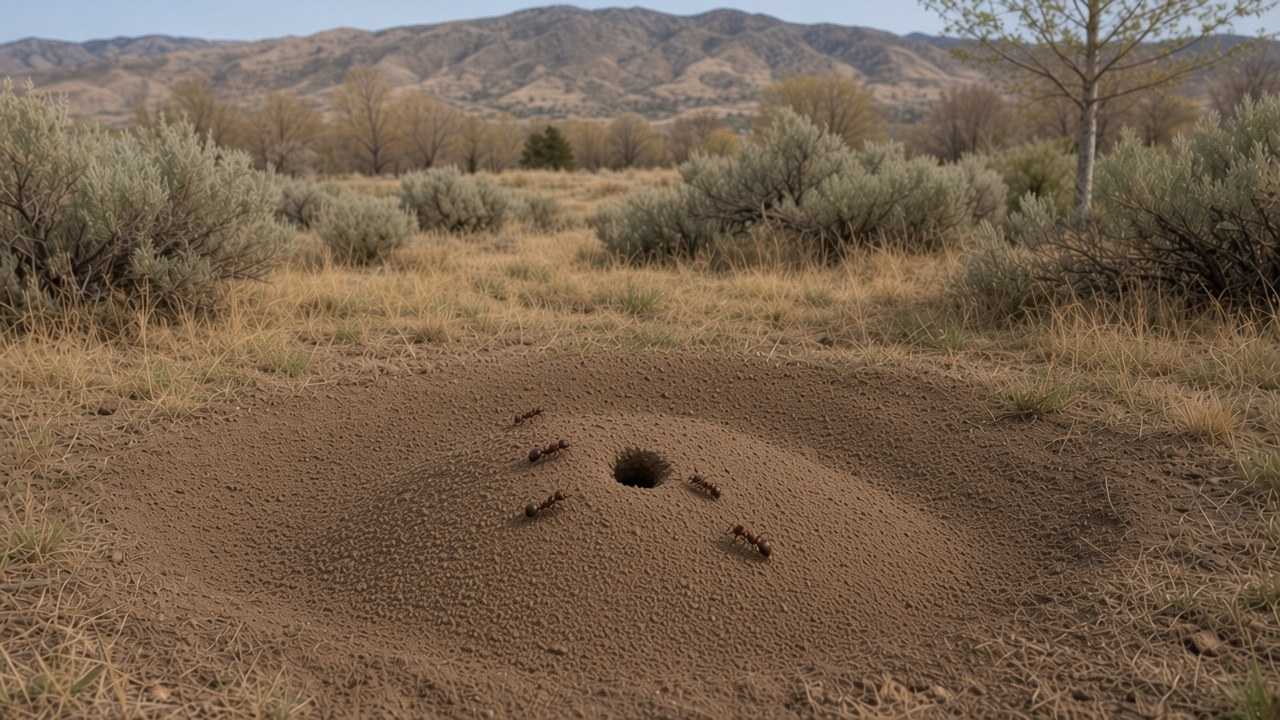
Pest ID: Harvester ants (Pogonomyrmex species)
Danger level: ModerateHow to recognize it
- Large and reddish brown, up to about 3/8 inch (Pacific Northwest Extension: 6–8 mm and mostly one size)
- A fringe or “beard” of long hairs under the chin, used in digging, visible with a hand lens
- Two waist segments (nodes), unlike carpenter ants and odorous house ants
- A low, flat mound, often about six inches tall, in a wide circle of bare, plant-free soil
- Pebbles often scattered around the entrance, with foraging trails leading out through dry grass
Where it shows up
- Open, unshaded, dry soil at the edge of a yard or subdivision
- Foothills-adjacent lots and rangeland-like openings
- Sunny, sandy ground rather than irrigated, shaded landscape beds
- Rarely indoors; they are not a typical kitchen-trail ant
Common look-alikes
- Pavement ants
- Much smaller and dark. They push little soil piles from sidewalk and driveway cracks and often trail indoors for food. Their sting is usually too small to penetrate skin.
- Thatching or mound ants (Formica)
- Can build mounds in lawns and beds, but University of Idaho Extension says those nonstinging mounds lack the large bare circle of stripped plants.
- Carpenter ants
- Often larger and black or red-and-black, nesting in damp wood, not in a bare soil circle. See carpenter ant control if you have frass or indoor sightings.
Why the danger rating: University of Idaho Extension says this is the only ant in Idaho home landscapes with a significant sting hazard. The nest is usually easy to see and avoid. Allergic reactions need emergency care.
What harvester ants are, and what they are not
If you are dealing with a trail of small dark ants at the sink, you probably do not have harvester ants. Start with ant control in Boise or, for bait versus a licensed visit, DIY vs professional ant control.
Harvester ants are named for how they eat. University of Idaho Extension’s Homeowner Guide to Minor Stinging Insects (BUL 0853, revised October 2025) describes Pogonomyrmex species as large, reddish-brown ants, up to about 3/8 inch, that gather seeds and clear huge bare spots around a mound-like nest. Workers may follow foraging trails as far as about 200 feet from the mound, including across adjoining yards.
Pacific Northwest Extension publication PNW 624, written for Washington, Idaho and Oregon, adds that most species are reddish or reddish brown and one size (6–8 mm), and that they are easy to recognize by a psammophore — a beard of hairs under the chin — used in digging for seeds. They nest in sandy soil of a particular texture and ordinarily feed on seeds of grasses and weeds.
How to recognize the mound
The nest is the giveaway, more than any single ant. University of Idaho Extension describes a low, flat mound, usually about six inches tall, almost always in open, unshaded, dry soil, with a scattering of pebbles around the entrance. The surrounding ground is stripped of plants. Other Idaho mound-building ants that do not sting can look similar until you notice that their mounds are not surrounded by those large bare spots.
That bare circle is also why a mound at the edge of a new foothills lot or a dry side yard stands out from a pavement-ant soil pile in a sidewalk crack, or from carpenter ants in damp wood.
How to read a harvester ant nest in a Treasure Valley yard
- A wide, plant-free circle of bare soil around the nest
- A low, flat mound, often about six inches tall, sometimes with pebbles at the entrance
- Foraging trails used to collect seeds, which can run a long way from the mound
- Treatment is mainly for mounds in a landscape people cannot easily walk around
- A visible nest in open ground is often left alone, as University of Idaho Extension advises
University of Idaho Extension says control is justified only in the uncommon case that a mound occurs in a home landscape. The diagram is schematic and does not show a measured distance.
Why the Treasure Valley comes up in the research
PNW 624 states that the greatest number of these colonies in the Pacific Northwest occurs along the Snake River and Columbia River areas, and that people who are stung are usually picnicking, fishing, rock-hounding or doing other outdoor recreation. The Treasure Valley sits on the Snake River plain, so that regional pattern is relevant here, especially on dry, open ground at the edge of town and along the foothills.
The same publication says this is usually not a serious pest unless there is an allergic reaction, and that few people are stung. University of Idaho Extension, whose authors include a Canyon County Extension educator, makes a similar point for Idaho yards: nests occur especially in rangeland habitats and only rarely around homes, and the sting, while intensely painful, poses a low risk because the highly visible nest is easy to avoid. Control, the bulletin says, is justified only in the rare circumstances where mounds occur in home landscapes.
An older University of Idaho nuisance-ant publication (CIS 988) notes that harvester ants are occasionally found in homes on the Snake River plains. Occasional is the right word. A kitchen trail is still more often odorous house ants or pavement ants.
Stings, first aid and when to leave the mound alone
University of Idaho Extension is direct: most ants in Idaho home landscapes entirely lack stings, and harvester ants are the only species that poses a significant sting hazard to people here. PNW 624 compares the sting to a honey bee or yellowjacket. Avoid walking, sitting or kneeling on the bare circle, and keep children and pets from playing on it.
For a typical sting, Mayo Clinic first-aid guidance for insect stings is to move away from the insects, wash the area with soap and water, and apply a cold pack to reduce pain and swelling. Call 911 or emergency services if anyone has trouble breathing, swelling of the lips, face, eyelids or throat, dizziness, fainting, or hives. This page is not medical advice; follow current medical guidance and your own clinician if you have a known venom allergy.
If the mound is out in open ground that people can simply walk around, Extension’s advice is essentially to leave it. Treatment belongs on the short list when the nest is in a lawn, path, play area or other place where accidental contact is likely.
Kitchen trails and colony baiting are covered on ant control in Boise and in DIY vs professional ant control. Large black ants in damp wood are usually carpenter ants, not harvester ants. Dry foothills-edge lots have more of this open-soil habitat; see the Highlands guide. For quotes, see what drives pest control cost.
What to do if you find a mound in a Boise yard
- 1Inspect
Look at the nest from a safe distance: a low mound in a bare, plant-free circle, often with pebbles at the entrance, and large reddish-brown ants rather than a kitchen trail.
- 2Identify
Rule out pavement-ant piles in pavement cracks, thatching-ant mounds without a wide bare circle, and carpenter ants in wood. A close photo or a specimen helps if you are unsure.
- 3Treat
If people or pets cannot easily avoid the mound, request a licensed applicator. Utah State University Extension, a neighboring land-grant guide, recommends granular ant baits labeled for lawn use around the nest opening; follow the label. Do not flood or shovel the nest.
- 4Prevent
Keep play equipment and frequent walking paths off dry, open soil circles you cannot watch. A general household pest plan may not automatically include a rangeland mound at the property edge — ask what is in scope.
Sources
- University of Idaho Extension, BUL 0853, Homeowner Guide to Minor Stinging Insects (Bechinski, Merickel and Stokes; revised October 2025)
- Pacific Northwest Extension, PNW 624, Identification and Habits of Key Ant Pests in the Pacific Northwest (Washington State University, Oregon State University and University of Idaho)
- University of Idaho Extension, CIS 988, Nuisance Ants (Homan and Merickel)
- Utah State University Extension, Harvester Ants (Pogonomyrmex spp.)
- Mayo Clinic, Insect bites and stings: First aid
Frequently asked questions
Are harvester ants common in Boise yards?+
Pacific Northwest Extension says the greatest number of harvester ant colonies in the region occurs along the Snake River and Columbia River areas, which includes the Treasure Valley. University of Idaho Extension adds that nests almost always sit in open, unshaded, dry soil, especially on rangeland, and only rarely around homes. You are more likely to see a bare mound at a dry lot edge or foothills-adjacent yard than a trail on a kitchen counter.
Do harvester ants sting, and how bad is it?+
Yes. University of Idaho Extension says harvester ants (Pogonomyrmex species) are the only ants in Idaho home landscapes that pose a significant sting hazard, and that the sting is intensely painful. Pacific Northwest Extension compares it to a honey bee or yellowjacket sting, and notes that this is usually not a serious pest unless there is an allergic reaction; few people are stung, because the nests are easy to see. Call 911 if anyone has trouble breathing, swelling of the face or throat, dizziness or hives after a sting.
How can I tell a harvester ant mound from other ant mounds in Boise?+
Look for a low, flat mound, often about six inches tall, in the middle of a wide circle of bare soil where plants have been stripped away, sometimes with pebbles around the entrance. University of Idaho Extension says other mound-building ants in Idaho that do not sting are easy to tell apart because their mounds are not surrounded by large spots of bare soil. The ants themselves are large and reddish brown, up to about 3/8 inch, with a beard of hairs under the chin.
Should I treat a harvester ant nest in my Boise yard myself?+
University of Idaho Extension says control is justified only in the uncommon case that a mound is in a home landscape, and that the visible nest is otherwise easy to avoid. If the mound sits in a play area, path or dog run, a licensed applicator can treat it. Neighboring Utah State University Extension recommends granular ant baits labeled for lawn use around the nest opening; follow the label and keep children and pets away. Do not treat it like a kitchen ant trail, and do not stir the mound with a shovel.
Do harvester ants come inside Treasure Valley homes?+
Usually no. They are seed-collecting mound ants, not a typical kitchen-trail species like odorous house ants or pavement ants. An older University of Idaho Extension nuisance-ant publication notes that harvester ants are occasionally found in homes on the Snake River plains. If you have a small dark trail at the sink, start with the general ant guide rather than assuming harvester ants.
Licensing in Idaho: how to verify a provider
In Idaho, professional pesticide applicators are licensed by the Idaho State Department of Agriculture (ISDA). To get licensed, they pass an exam for each category of work they do and show proof of financial responsibility. Since ISDA's 2024 rule update, home and building pest work for insects, spiders and wood-destroying pests such as termites falls under the Industrial, Institutional, and Structural Pest Control – Non-Commodity (IP) category. Rodent work may also involve General Vertebrate Control (GV). (ISDA license categories)
Before you hire anyone, ask for the applicator's name and license number. Check that the license is current, and that it covers the right category, with ISDA's Certified Applicator License Search, or call ISDA pesticide licensing at (208) 332-8600. Also ask what products they plan to use, and ask for the label or safety data sheet if you have kids, pets, or a well.