Scorpions in Boise, ID: Present, but Uncommon as Pests
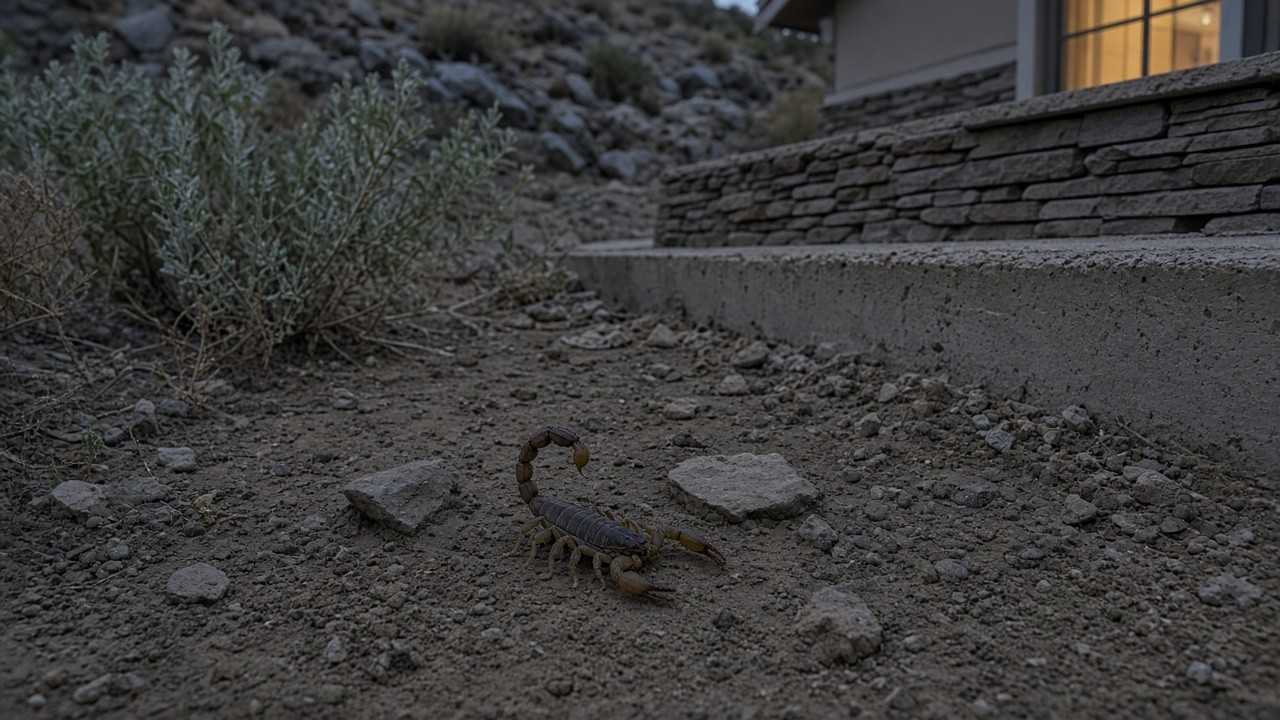
Pest ID: Northern scorpion (Paruroctonus boreus)
Danger level: LowHow to recognize it
- Claw-like pincers at the front and a thin, segmented tail that ends in a curved sting — the easy field ID for any scorpion
- The northern scorpion, Idaho’s most widespread species, is small: Idaho Fish and Game and Extension both put adults at about two inches
- Body usually brown, with paler banding or a light line at segment edges; legs, pincers and tail often more yellowish brown
- Nocturnal; hides by day under rocks, stacked wood and other cover, and hunts insects at night
- Not an Arizona bark scorpion, and not a large desert “hairy” scorpion unless you are in the right southern desert habitat
Where it shows up
- Barren, fissured or rocky soil on sloping hills, which University of Idaho gives as the usual northern-scorpion habitat
- Dry sagebrush and foothills-edge yards more than irrigated mid-city lawns
- Under rocks, woodpiles and debris, and sometimes along a foundation or rock retaining wall
- Rarely indoors, and usually as a single wanderer if they do get in
Common look-alikes
- Jerusalem cricket or camel cricket
- Large, clumsy insects without a segmented sting tail or pincers. They startle people in crawlspaces and garages but are not scorpions.
- Solifuges or “sun spiders”
- Other arachnids in dry country can look alarming. A scorpion is the one with the obvious sting-bearing tail. University of Idaho’s arachnid guide covers these relatives if you want a side-by-side.
- Arizona bark scorpion
- That is a different, more medically important species of the Southwest. It is not the species University of Idaho describes for Idaho homes.
Why the danger rating: University of Idaho Extension says none of Idaho’s scorpions poses a significant health threat except for rare venom allergies. A typical sting is compared to a bee or wasp sting. Seek emergency care for signs of an allergic reaction.
They live here. That does not make them a typical house pest.
Searches for a Boise scorpion exterminator are understandable. The accurate local picture is quieter. University of Idaho Extension’s Homeowner Guide to Idaho’s Arachnids (BUL 1094) says scorpions are almost always seen as lone individuals, are not considered pests, and do not require any control. The older Homeowner Guide to Scorpions and Their Relatives (CIS 1168) places them primarily in the sagebrush desert of southern Idaho, with the northern scorpion ranging farther north than any other U.S. scorpion, including along the Snake River canyon to Lewiston.
The Treasure Valley sits in that southern sagebrush country. You are more likely to see one at a rocky foothills-edge lot, a stacked rock wall, or under a board in dry ground than in a closely watered Bench yard. That is presence, not an infestation score.
Stings, first aid and when a licensed visit makes sense
Both UI guides describe a typical Idaho scorpion sting as similar to a bee or wasp sting: pain, localized swelling, and sometimes itching or bruise-like discoloration that can last a few days. The serious exception is a known venom allergy. If anyone has trouble breathing, swelling of the face or throat, dizziness, fainting or hives, call 911. This page is not medical advice.
Extension’s examples of how people get stung are ordinary: turning over a rock, or putting a foot into a shoe. Shake out shoes, gloves and bedding if you live against dry, rocky ground. Do not handle a scorpion with bare hands.
A licensed inspection is the exception, not the default: repeated indoor sightings, an obvious gap you cannot seal, or a household member with a venom allergy. There is no Idaho Extension recommendation for routine scorpion spraying. If you do request a visit, keep the scope narrow and compare it with how pest control bids are usually built.
Where a northern scorpion is likely — and what to do
- Dry, rocky, sloping ground and sagebrush: the usual habitat
- Daytime hiding places: rocks, stacked wood and debris
- Night hunters of insects, uncommon on a mid-city irrigated lawn
- Shake out shoes and gloves before you put them on
- A lone outdoor animal usually does not require pest control
University of Idaho Extension says Idaho scorpions are not considered pests and do not require control, and that a typical sting is like a bee sting except for rare allergies. The drawing is schematic.
Foothills-edge lots versus irrigated city yards
University of Idaho describes northern scorpions most often on barren, fissured or rocky sloping ground. That description fits parts of the Boise Front and similar dry edges better than a flat, irrigated subdivision lawn. For housing context on those edges, see the Highlands pest guide. A single sighting still does not mean the neighborhood has a scorpion problem.
Idaho Fish and Game’s public notes add that northern scorpions are not active in temperatures below about 50°F, and that July and August nights are when people who go looking with a black light tend to see them. That is seasonal natural-history, not a treatment calendar.
A single outdoor scorpion is usually left alone. If you are dealing with stinging insects in eaves or a patio instead, see wasp and yellowjacket control. Foothills-edge lots are described in the Highlands pest guide. Broader six-legged questions belong on the insect control hub.
If you find a scorpion around a Boise home
- 1Inspect
Leave it alone if it is outside and you can simply step around it. If it is indoors, do not pick it up with your hands. Note whether it is a single animal and where it was hiding.
- 2Identify
Confirm the pincers and sting tail. Idaho’s common species is a small, brown northern scorpion, not a large southwestern bark scorpion. A photo or a specimen in a jar can go to University of Idaho Extension if you want a name.
- 3Treat
Control is usually unnecessary. Seal the gap if one got indoors. Request a licensed inspection only if sightings repeat, someone has a venom allergy, or you cannot find how it entered.
- 4Prevent
Shake out shoes and gloves, reduce piled rock and boards against the foundation, and use a door sweep on foothills-edge doors. There is no Extension-backed routine spray program to buy.
Sources
- University of Idaho Extension, BUL 1094, Homeowner Guide to Idaho’s Arachnids Around the Home and Field (Chris A. Hamilton)
- University of Idaho Extension, CIS 1168, Homeowner Guide to Scorpions and Their Relatives (Bechinski, Schotzko and Baird, November 2009)
- Idaho Department of Fish and Game, Wildlife Express, “Scorpions” (Volume 36, Issue 2, October 2022)
Frequently asked questions
Do scorpions actually live in Boise?+
Yes, but they are not a typical household pest in town. University of Idaho Extension says Idaho scorpions occur primarily in the sagebrush desert of the southern half of the state, and that the northern scorpion (Paruroctonus boreus) is the widespread species, found on barren, fissured or rocky soil on sloping hills and mountains, and even as far north as Lewiston along the Snake River canyon. In the Treasure Valley that usually means dry, rocky foothills-edge ground, not an irrigated mid-city lawn.
Are Idaho scorpions dangerous?+
University of Idaho Extension says none of Idaho’s scorpions poses a significant threat to human health, except for the rare person with a known venom allergy, to whom a sting can be life-threatening. A typical sting is described as similar to a bee or wasp sting, with localized swelling, pain and sometimes itching or bruising that can last a few days. Call 911 or emergency care for trouble breathing, swelling of the face or throat, dizziness or hives. This page is not medical advice.
Do I need an exterminator if I see a scorpion?+
Usually no. University of Idaho’s homeowner arachnid guide says scorpions are almost always seen as lone individuals, are not considered pests, and do not require any control. Seeing one under a rock or along a foothills foundation is not, by itself, a reason for a whole-house treatment. A licensed visit is more reasonable if scorpions are repeatedly getting indoors and you cannot find the gap, or if someone in the home has a known venom allergy and wants a careful inspection.
What should I do if I find a scorpion in the house?+
Do not try to pick it up. A jar and a stiff piece of paper, or a licensed applicator, is safer than a bare hand. Check shoes, gloves and bedding if one has been found indoors, and look for a gap at a door sweep, foundation crack or rock wall. University of Idaho notes that stings often happen when someone carelessly turns over a rock or puts a foot into a shoe where a scorpion was hiding.
Which scorpion species live in Idaho?+
The most recent University of Idaho homeowner arachnid guide (BUL 1094) describes three species: the northern scorpion (Paruroctonus boreus), the yellow devil scorpion (Paravaejovis confusus) and the black hairy scorpion (Hadrurus spadix). The last two are described as Great Basin desert inhabitants of southern Idaho. An older UI bulletin used a different count, and Idaho Fish and Game has used another. For a Treasure Valley homeowner, the practical point is the same: the widespread species is the smaller northern scorpion, and none of them is treated as a medically significant pest in official Idaho Extension guidance.
Licensing in Idaho: how to verify a provider
In Idaho, professional pesticide applicators are licensed by the Idaho State Department of Agriculture (ISDA). To get licensed, they pass an exam for each category of work they do and show proof of financial responsibility. Since ISDA's 2024 rule update, home and building pest work for insects, spiders and wood-destroying pests such as termites falls under the Industrial, Institutional, and Structural Pest Control – Non-Commodity (IP) category. Rodent work may also involve General Vertebrate Control (GV). (ISDA license categories)
Before you hire anyone, ask for the applicator's name and license number. Check that the license is current, and that it covers the right category, with ISDA's Certified Applicator License Search, or call ISDA pesticide licensing at (208) 332-8600. Also ask what products they plan to use, and ask for the label or safety data sheet if you have kids, pets, or a well.